
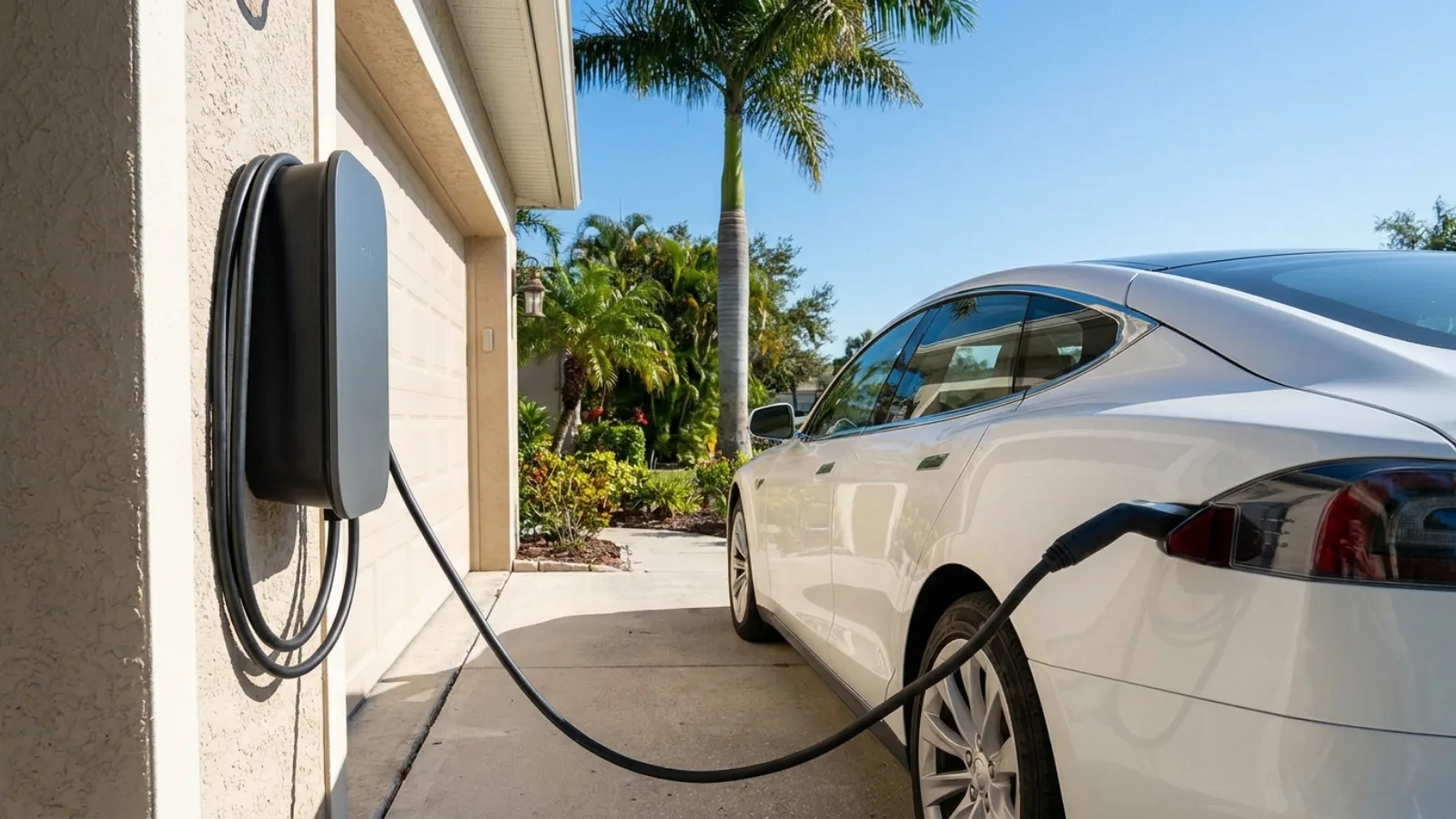

Can My Solar and Battery System Power My EV Charger?
Short answer: yes, in most cases a properly sized solar and battery system can power a home EV charger, but EV charging is one of the largest single loads in a home, so it needs to be planned into your system sizing rather than added as an afterthought.
Quick answer: A Level 2 EV charger can draw as much power as several major appliances running at once, so whether your solar and battery system can support it comes down to your system’s capacity and how your charging schedule lines up with solar production or battery availability.
Why EV charging is different from your other home loads
Most household loads, like lighting, a refrigerator, or a TV, draw relatively small and often intermittent amounts of power. A Level 2 EV charger, by contrast, can draw a sustained, significant load for hours at a time while a vehicle charges, which makes it one of the biggest single contributors to your home’s energy use on any given day.
This doesn’t mean solar and battery can’t handle it, it just means EV charging needs to be accounted for specifically when sizing a system, the same way we’d account for a pool pump or HVAC system, rather than assumed to fit within whatever capacity is left over.
Timing charging around solar and battery capacity
If you charge during daylight hours, your solar system can potentially cover some or all of that load directly, reducing how much comes from the grid or your battery. If you charge overnight, the load instead draws from your battery (if sized for it) or from the grid, depending on your setup and how your utility structures its rates.
Many homeowners find that shifting EV charging to match solar production, or scheduling it during off-peak utility hours, makes a meaningful difference in how the system performs day to day. This is a scheduling and system-design conversation as much as an equipment one.
What we actually plan for
When we design a solar and battery system for a home with an EV, or one planning to add one, we build your charging habits into the load calculation from the start, alongside your other appliances and any other electrified systems like a heat pump water heater or pool equipment.
This is also where whole-home load planning matters most, since a system sized only for your current appliances without accounting for EV charging can end up underpowered once you add that load in. It’s a common gap we help homeowners avoid by planning for where their home’s energy use is actually headed.
See what solar and battery storage would actually do for your home
We will pull your last 12 months of utility data, model your real consumption, and show you exactly what a system would cost and produce — no obligation, no pressure.
Frequently asked questions
Do I need a bigger solar system if I have an EV?
Often yes, since EV charging adds meaningfully to your daily energy use. The right size depends on your driving habits and charging schedule, which is why we factor this into system sizing rather than using a generic estimate.
Can my battery run out if I charge my EV overnight?
It’s possible if the battery isn’t sized to cover both your typical overnight home loads and EV charging. This is exactly the kind of scenario we model during system design so the battery is sized appropriately for your actual usage.
Is it better to charge my EV during the day or at night?
It depends on your solar production, battery capacity, and utility rate structure. Daytime charging can draw more directly from solar, while nighttime charging depends on battery capacity or grid rates, so the better option varies by household.
Can I add EV charging to an existing solar system later?
Often yes, though it’s worth having your installer review whether your existing system and panel have the capacity to support it, since retrofitting a large new load can require adjustments.
Does charging my EV from solar reduce my electric bill?
It can, to the extent your EV charging draws from solar production rather than the grid, though the actual savings depend on your system size, rate structure, and charging schedule.
Related guides
- Solar systems
- Battery storage
- How do you size a home battery system for your actual usage?
- Do you need a panel upgrade for a home EV charger?
- Get a free energy evaluation
Figures on this page are typical industry averages for planning purposes and assume Florida’s 14.5¢/kWh average residential rate and 5.5 peak-sun hours per day. Your actual numbers will differ based on your utility, roof, and system — request a free evaluation for figures specific to your home.