
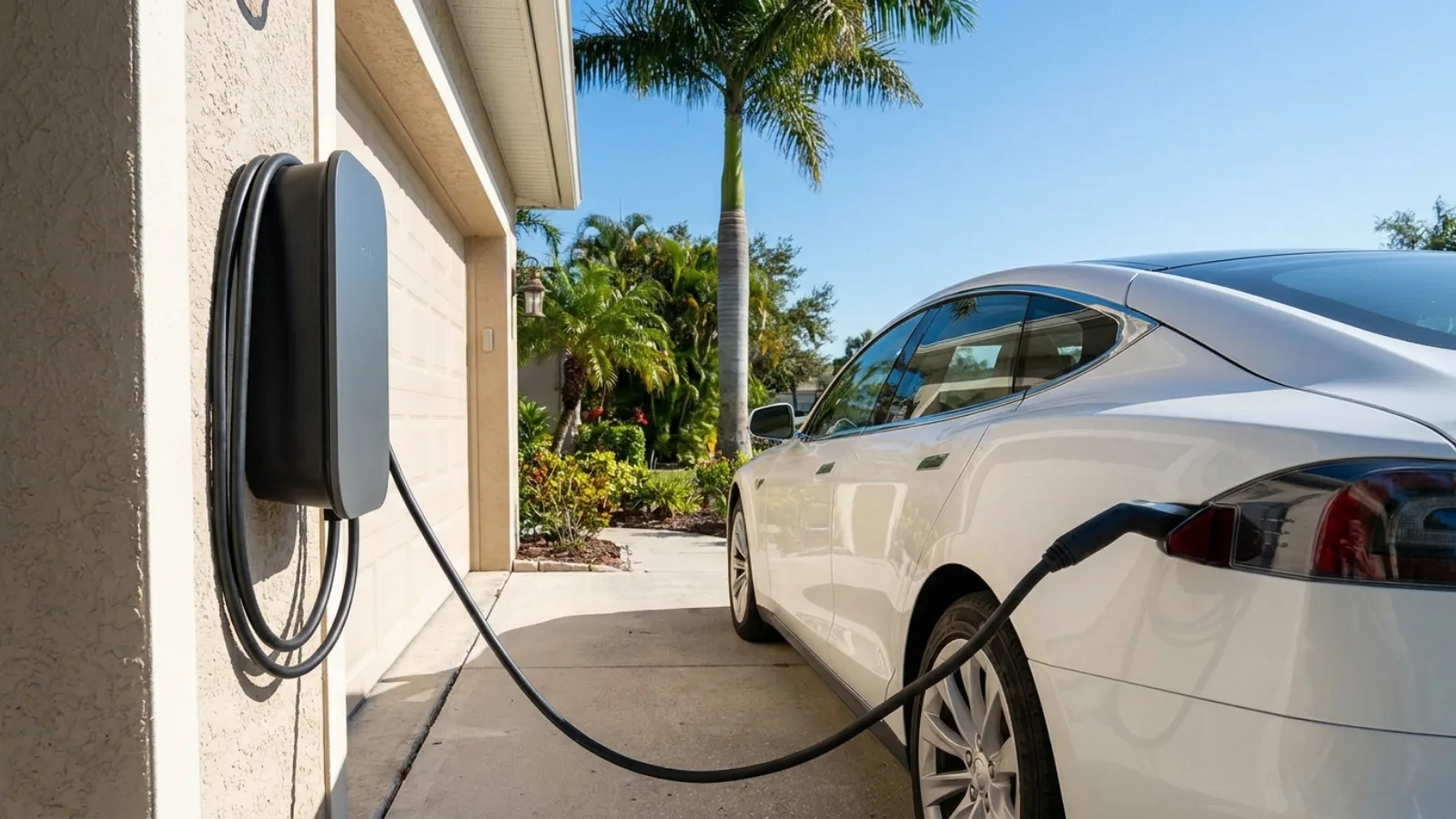

Do You Need an Electrical Panel Upgrade for a Home EV Charger?
Short answer: it depends on your panel’s current capacity and how much power is already allocated to your other major appliances, so an electrician needs to run a load calculation before you can know for sure whether your home needs an upgrade.
Quick answer: A Level 2 EV charger needs a dedicated 240V circuit with enough spare capacity on your panel, and older homes with 100-amp panels or panels already near full capacity from HVAC, pool, and other appliances are the most likely candidates to need an upgrade to something like 150 or 200 amps.
What a Level 2 charger actually demands from your panel
A Level 2 EV charger needs a dedicated circuit sized to its amperage rating, which is meaningfully more than most household circuits carry. Your panel needs both an available breaker slot and enough remaining electrical capacity, after accounting for everything else already running in your home, to safely support that new circuit.
This is different from just having an open slot in the breaker box. A panel can have physical space for a new breaker while still lacking the overall amperage capacity to support it safely, which is why a proper load calculation matters more than a quick visual check.
How to know if your home needs an upgrade
Older homes, particularly those still running 100-amp panels, are the most common candidates for an upgrade, especially if they also have other significant electric loads like central air conditioning, an electric water heater, or pool equipment. Homes with newer 200-amp panels are more likely to have room for a Level 2 charger without additional work, but this still needs to be confirmed rather than assumed.
An electrician performs a load calculation that accounts for all of your home’s existing circuits and their typical usage, then determines whether there’s enough remaining capacity for the new EV charging circuit, or whether the panel itself needs to be upgraded to a higher amperage rating first.
What the upgrade process generally looks like
If an upgrade is needed, it typically involves replacing the panel with a higher-capacity unit, which is a bigger job than the charger installation itself and usually requires permitting and inspection. It’s worth planning for as part of the same project rather than as a separate surprise expense discovered mid-installation.
This is also a good time to think ahead. If you’re planning to add solar, a battery, or other electrified systems down the road, it’s worth discussing your broader electrical plans with your installer so the panel upgrade, if needed, is sized for where your home’s energy use is headed, not just for the charger alone.
See what solar and battery storage would actually do for your home
We will pull your last 12 months of utility data, model your real consumption, and show you exactly what a system would cost and produce — no obligation, no pressure.
Frequently asked questions
How do I know if my panel can handle an EV charger?
The reliable way is a load calculation performed by an electrician, which accounts for your panel’s total capacity and everything already drawing power from it, rather than just checking whether there’s an open breaker slot.
Is a panel upgrade expensive?
Costs vary based on your home’s existing electrical setup and the scope of work involved, so it’s best evaluated directly rather than estimated generally. We can walk through this as part of an EV charger installation quote.
Can I install an EV charger without a panel upgrade?
If your panel has sufficient remaining capacity, yes. Many homes, particularly those with newer or higher-amperage panels, don’t need an upgrade at all, which is why the load calculation step matters before assuming either way.
Does a panel upgrade affect my solar or battery plans?
It can be relevant, since panel capacity affects how much total electrical load your home can support across EV charging, solar, battery storage, and other systems, so it’s worth planning these together if you’re considering more than one.
How long does a panel upgrade take?
Timelines vary based on permitting, inspection, and your utility’s process for any required coordination, so your installer can give you a realistic timeline once the scope of work is defined.
Related guides
- How does a home EV charger actually work?
- Bidirectional EV chargers
- Can my solar and battery system power my EV charger?
- Solar systems
- Get a free energy evaluation
Figures on this page are typical industry averages for planning purposes and assume Florida’s 14.5¢/kWh average residential rate and 5.5 peak-sun hours per day. Your actual numbers will differ based on your utility, roof, and system — request a free evaluation for figures specific to your home.