
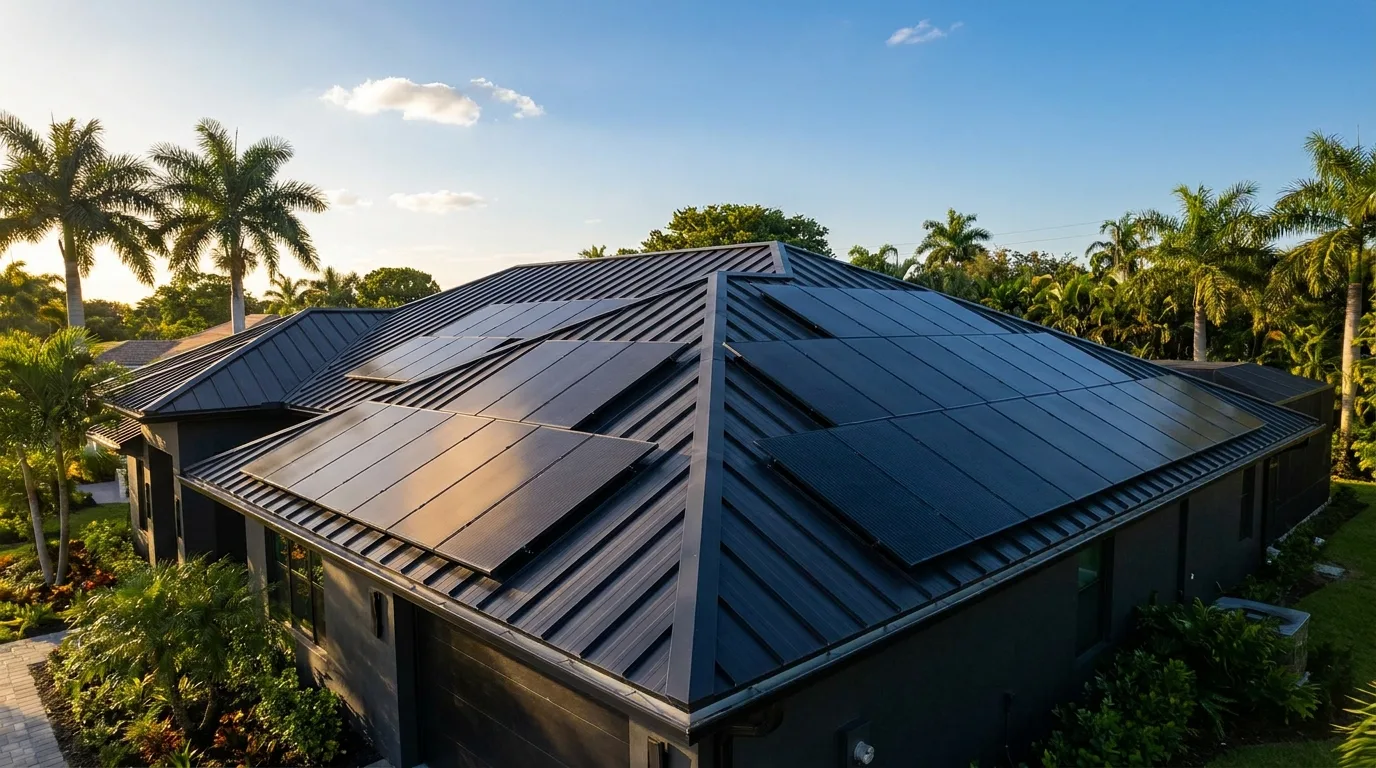

What Happens If Solar Is Installed Without a Permit in Florida?
Short answer: unpermitted solar creates problems at resale, with your insurer, with your utility and with any future roof work, and the building department can require it to be exposed, corrected or removed at your cost.
Quick answer: An unpermitted solar installation is not a paperwork technicality in Florida. It is an unapproved structural and electrical alteration to your home, and the consequences land on the property owner rather than on the installer who left.
Most homeowners discover the problem years later, usually when they try to sell, refinance, replace the roof or make an insurance claim after a storm. At that point the array has to be brought into compliance retroactively, which is far more expensive than doing it correctly the first time, and occasionally it cannot be done at all without removing the system.
Where it surfaces
| Situation | What typically happens |
|---|---|
| Selling the home | Title and inspection turn up unpermitted work; buyers request correction or a price reduction |
| Insurance claim after a storm | Insurer may dispute coverage for damage arising from unpermitted alterations |
| Roof replacement | Roofer will not warrant work around an unapproved, undocumented attachment system |
| Utility discovers it | Interconnection can be refused or revoked for an unapproved system |
| Code enforcement | After-the-fact permit required, potentially with exposure of concealed work and engineering assessment |
How to check and what to do
- Look up the permit record. Florida building departments publish permit history by address. If there is no solar permit, there is no approved installation.
- Get a structural and electrical assessment. Before applying for an after-the-fact permit, you need to know whether the installation is actually compliant.
- Expect exposure of concealed work. Inspectors cannot approve what they cannot see. Attachment points may need to be uncovered.
- Do not assume it is fine because it works. An array can generate power for years and still be attached in a way that fails in a storm.
- Ask who pulled the permit on any new quote. A contractor asking you to pull an owner-builder permit is moving code liability onto you.
What we handle for you
We can assess an existing unpermitted array, tell you honestly whether it can be brought into compliance, and take it through after-the-fact permitting where it can.
See what solar and battery storage would actually do for your home
We will pull your last 12 months of utility data, model your real consumption, and show you exactly what a system would cost and produce — no obligation, no pressure.
Frequently asked questions
How do I find out if my solar was permitted?
Search the permit records for your address on your county or city building department website, or ask them directly.
Can I get a permit after the fact?
Often yes, through an after-the-fact permit process, though it usually requires engineering assessment and may require exposing concealed work.
Will my insurer cancel my policy?
Insurers vary. The larger risk is a disputed claim after storm damage rather than immediate cancellation.
Is the original installer responsible?
Contractually there may be recourse, but many of the companies that did this work are no longer trading. The property owner carries the practical burden.
Does this affect my ability to sell?
Yes. Unpermitted work is a standard disclosure and inspection item and it routinely delays or reprices sales.