
Our battery storage solutions are designed to keep your home powered, reduce reliance on the grid, and deliver consistent energy when you need it most.
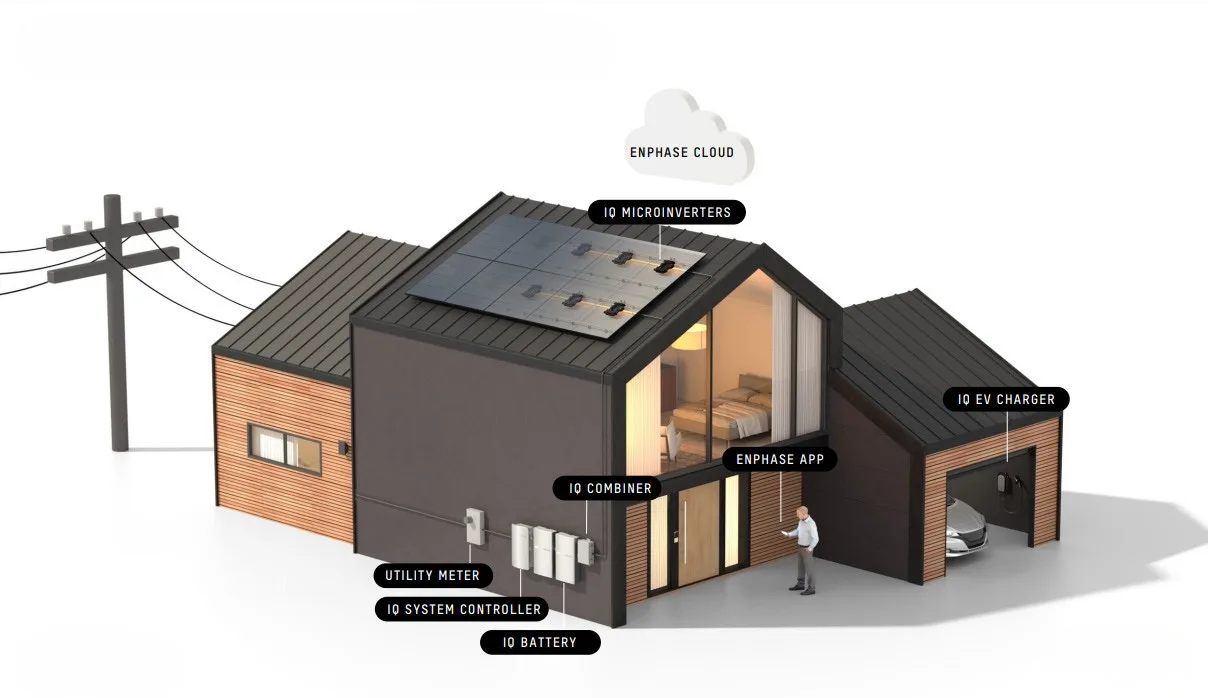
Smart control, real-time monitoring, and seamless integration.
✔ Reliable Backup PowerOptimizes usage and reduces dependency on the grid.
✔ Daily Usage OptimizationKeeps your home running during outages and failures.
✔ Power During OutagesSupports electric vehicle charging and future expansion.
✔ Future-Ready System

Most Florida outages are short: a summer thunderstorm knocks out a feeder for two hours. Hurricane outages are the other extreme and can run for days. Those two cases call for different designs, and the honest answer is that very few homes need whole-home backup.
A correctly designed system separates your loads. Essential circuits, meaning the refrigerator, well pump, internet, a handful of outlets, some lighting and usually one air handler or a mini-split, go on a protected sub-panel. Everything else stays on the grid side. That approach keeps the battery bank sized realistically and keeps you running for far longer during a multi-day event.
Two numbers matter and they are frequently confused. Capacity, measured in kilowatt-hours, is how much energy the battery holds. Continuous power output, measured in kilowatts, is how much it can deliver at once. A battery with plenty of stored energy will still trip if the starting surge of a five-ton condenser exceeds its output rating.
A battery does not require solar. Paired with a time-of-use rate, it can charge from the grid when energy is cheap and discharge during the expensive window. Paired with solar, it stores midday production for evening use instead of exporting it at whatever rate your utility credits. The economics depend entirely on your tariff, which is why we look at your actual bill structure first.
Energy storage installations in Florida require an electrical permit and, in most jurisdictions, a review against NFPA 855 for placement, separation and fire safety. Systems that can export to the grid need the same interconnection approval as solar. Inside the High-Velocity Hurricane Zone, exterior-mounted enclosures need appropriate product approval and attachment detail. We handle the applications, inspections and utility paperwork as part of the project.
Local pages with permitting, utility and rebate detail for each area we serve.
Most customers combine two or more of these in a single project.
Short answer: Commercial battery storage provides backup power during outages and reduces expensive peak-demand charges, whether paired with solar or installed as a standalone system.