

How Does Solar Battery Storage Work?
Short answer: a battery stores excess solar production during the day and releases it when you need it — at night, during peak-rate hours, or when the grid goes down.
Quick answer: Solar panels produce DC power, which either powers your home directly, charges the battery, or (with net metering) exports to the grid. When production drops or the grid fails, the battery discharges stored energy through an inverter to keep your circuits running.
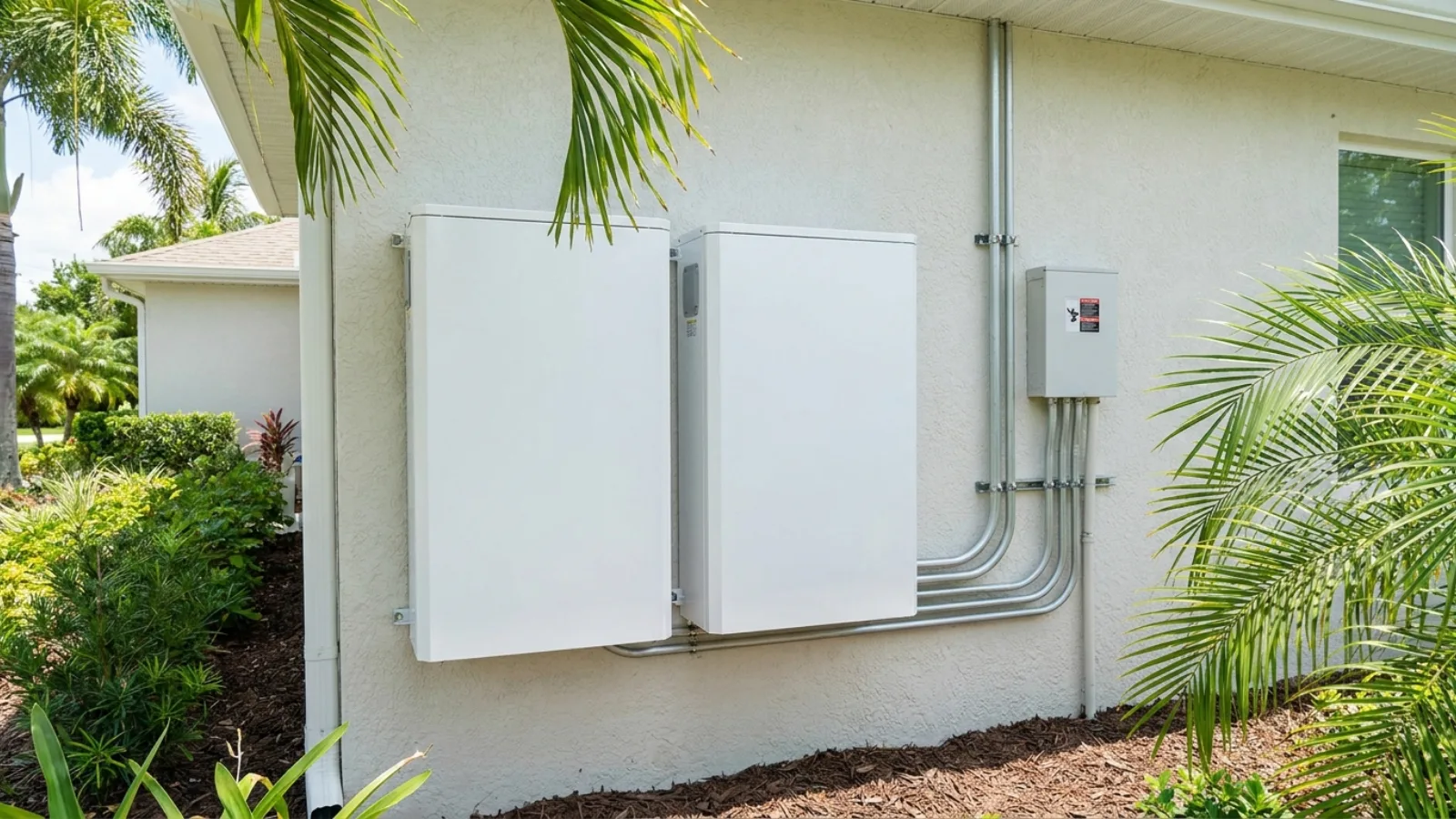
A home battery sits between your solar panels and your electrical panel, storing energy your panels produce but your home isn’t using at that moment, so it’s available later instead of being sent to the grid for a credit.
The basic energy flow
| Step | What happens |
|---|---|
| 1. Solar production | Panels generate DC electricity during daylight hours |
| 2. Home use first | Your house draws what it needs directly from panel production |
| 3. Battery charges | Remaining surplus charges the battery, typically up to a set reserve level |
| 4. Export or discharge | Once the battery is full, additional surplus exports to the grid; once the sun sets, the battery discharges to power your home before you draw from the grid |
What determines how much backup you get
- Battery capacity (kWh). A common home battery holds around 10-13.5 kWh, with usable capacity somewhat lower to protect battery life.
- Which circuits are backed up. Most installations back up an essential-loads subpanel — refrigerator, some lighting, outlets, and medical equipment — rather than the whole house, to stretch runtime further.
- Inverter rating. The inverter has to handle both continuous load and momentary surges, like a refrigerator or well pump starting up.
Backup power vs. bill savings
Batteries can be used two ways: for resilience during outages, or for time-shifting your own solar production to avoid peak utility rates if your plan has time-of-use pricing. Many Florida homeowners want both, and system design differs depending on which is the priority, which we walk through during your evaluation.
See what solar and battery storage would actually do for your home
We will pull your last 12 months of utility data, model your real consumption, and show you exactly what a system would cost and produce — no obligation, no pressure.
Frequently asked questions
What happens to solar power at night without a battery?
Without a battery, any solar credits earned during the day are used to offset what you draw from the grid at night through net metering, but you don’t have local backup power if the grid itself goes down.
How much does a home battery typically store?
A common home battery holds around 10-13.5 kWh, though usable capacity is somewhat lower to protect the battery’s long-term health.
Does a battery back up my whole house?
Usually not the entire house by default. Most installations back up an essential-loads subpanel covering key circuits, which stretches runtime further than trying to power everything.
Can a battery charge from the grid, not just solar?
Many battery systems can charge from the grid as well as solar, which is useful for time-of-use strategies or ensuring the battery is topped off before an anticipated storm.
Is a battery worth it if I already have net metering?
Net metering handles daily bill offsetting, but it doesn’t keep power on during an outage. A battery is a separate decision focused mainly on resilience, and sometimes on time-of-use savings.
Related guides
- What size battery do I need for my Florida home?
- Grid-tied vs. off-grid solar: what’s the difference?
- Home solar, battery and EV charging in Florida
- Solar systems
- Battery storage
- Florida solar by city
Figures on this page are typical industry averages for planning purposes and assume Florida’s 14.5¢/kWh average residential rate and 5.5 peak-sun hours per day. Your actual numbers will differ based on your utility, roof, and system — request a free evaluation for figures specific to your home.