
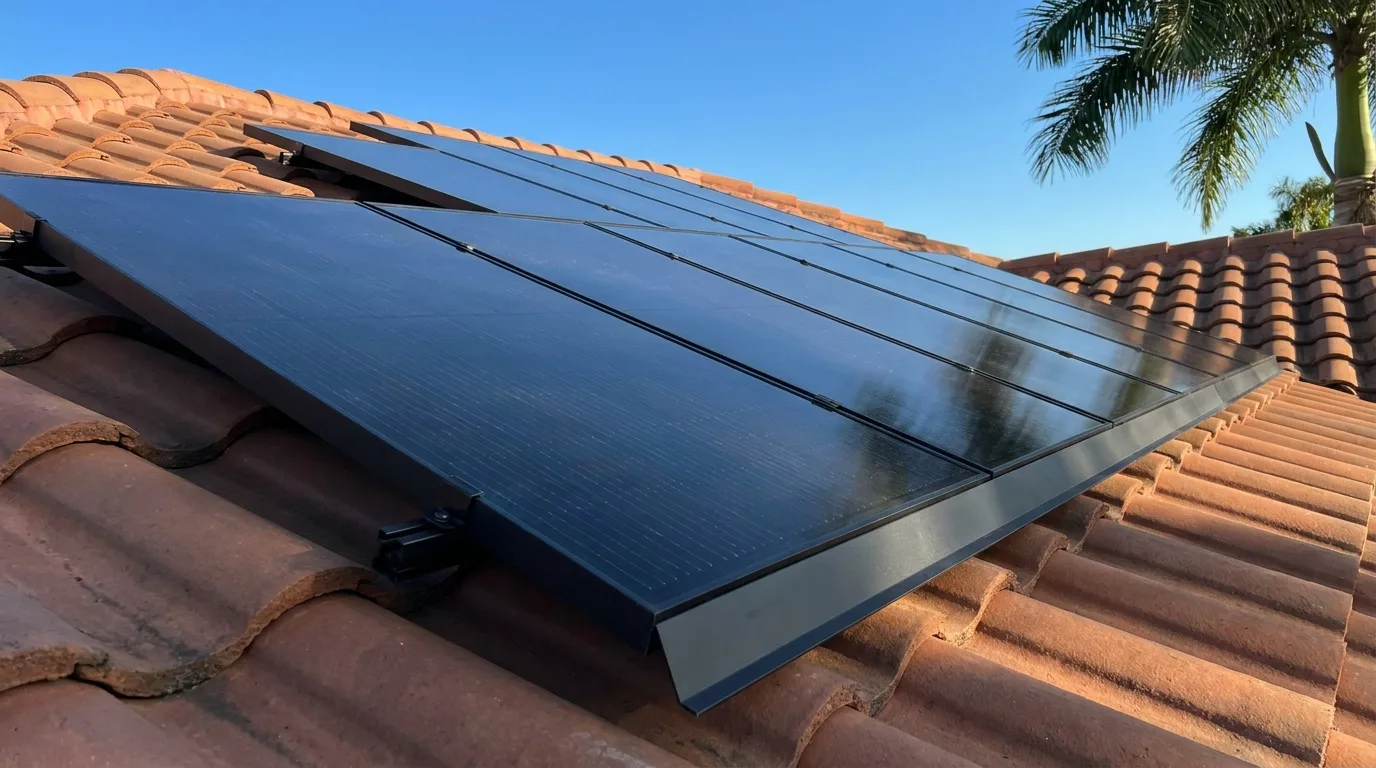

Do Solar Panels Work on Cloudy Days?
Short answer: yes, panels still produce power in cloudy or overcast conditions, just at a reduced rate, typically 10-25% of clear-sky output.
Quick answer: Solar panels use both direct and diffuse sunlight. On a cloudy day they might produce 10-25% of their clear-sky output rather than zero, and system sizing already accounts for Florida’s actual weather patterns, not just sunny-day best-case numbers.
This is one of the most common questions we get, and the short version is that solar panels don’t require direct, unobstructed sunlight to generate electricity — they respond to any light hitting the cells, including the diffuse light that gets through cloud cover.
What actually changes on a cloudy day
| Condition | Approximate output vs. clear sky |
|---|---|
| Clear sky | 100% |
| Light cloud / haze | 50–80% |
| Overcast | 10–25% |
| Heavy storm | Near zero, temporarily |
Why Florida’s rating already accounts for this
The 5.5 peak-sun-hours figure used to size Florida systems isn’t a clear-sky number — it’s an average that already factors in the state’s real mix of sunny, hazy, and rainy days across the year, including the summer wet season. That’s part of why sizing based on 12 months of actual utility bills, which capture a full year of Florida weather, tends to be more accurate than a single sunny-day estimate.
What matters more than clouds
Shading from trees or nearby structures typically has a bigger negative impact on annual production than cloud cover does, because shade can block a panel’s output far more severely and for longer stretches than passing clouds. We assess shading during your site evaluation as part of system design.
See what solar and battery storage would actually do for your home
We will pull your last 12 months of utility data, model your real consumption, and show you exactly what a system would cost and produce — no obligation, no pressure.
Frequently asked questions
Do solar panels stop producing power when it’s cloudy?
No. Panels still generate electricity from diffuse light on cloudy days, typically at 10-25% of clear-sky output rather than zero.
Does Florida’s rainy season significantly hurt solar production?
It reduces output on individual rainy days, but the annual production estimate used for system sizing, based on 5.5 peak-sun hours, already accounts for a full year of Florida weather including the wet season.
What affects solar output more, clouds or shade?
Shading from trees or structures typically has a larger negative impact on annual production than passing clouds do, since shade can block output more severely and consistently.
Do solar panels work in the rain?
Yes, though at reduced output during the storm itself. Rain can also help by washing dust and debris off panels, which supports slightly better performance afterward.
How is Florida’s peak-sun-hour number calculated?
It’s a long-term average of usable solar energy per day, already factoring in typical cloud cover, humidity, and seasonal weather patterns across the state rather than assuming constant sunshine.
Related guides
- How does shading affect solar panel performance?
- How many solar panels do I need for my home?
- Home solar, battery and EV charging in Florida
- Solar systems
- Battery storage
- Florida solar by city
Figures on this page are typical industry averages for planning purposes and assume Florida’s 14.5¢/kWh average residential rate and 5.5 peak-sun hours per day. Your actual numbers will differ based on your utility, roof, and system — request a free evaluation for figures specific to your home.