
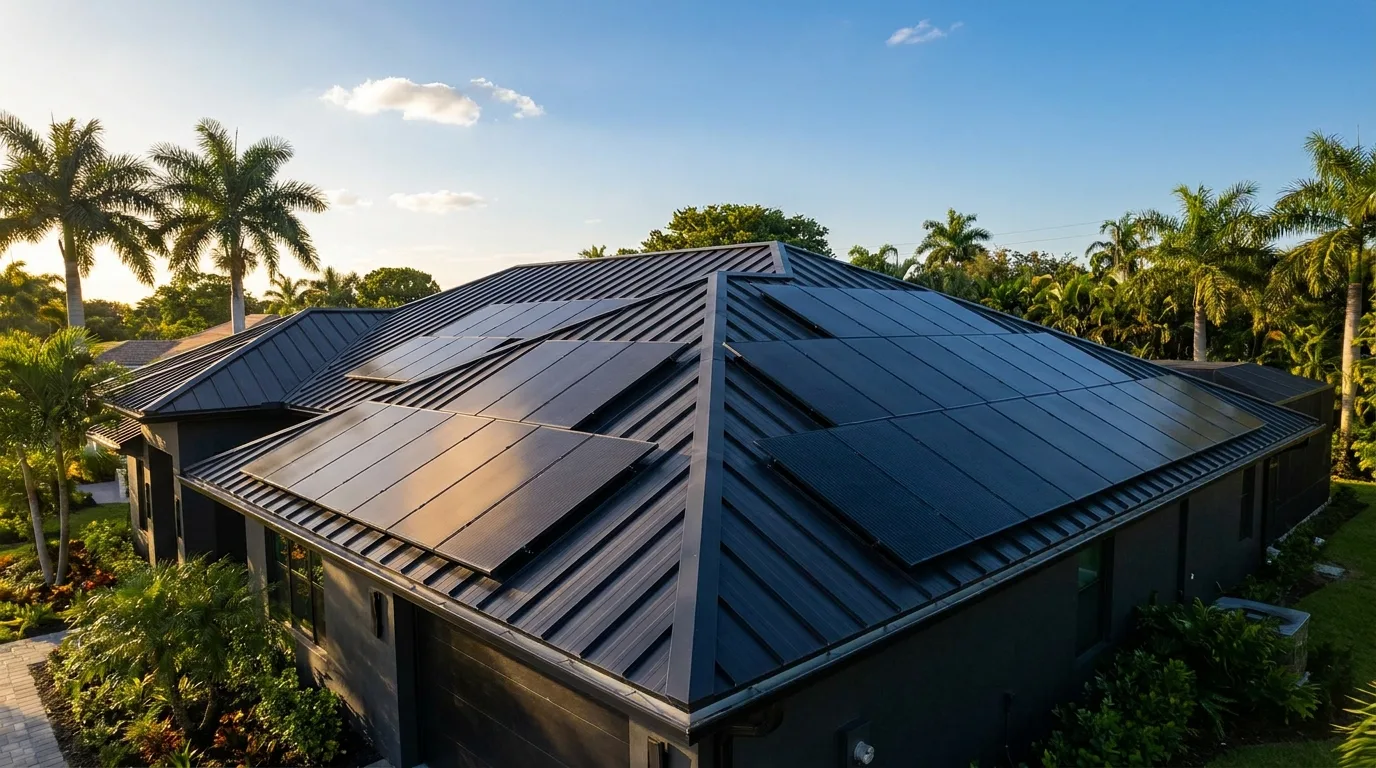

Solar Panel Installation in Miami, FL: What Homeowners Need to Know
Miami-Dade homeowners face high electric rates and strong sun, but also strict wind codes and HOA rules that make the right installer choice matter more than in most of the state.
Quick answer: Solar works well in Miami thanks to strong year-round sun and rising FPL rates, but a Miami installation needs to account for Miami-Dade’s stricter wind-load codes, HOA and condo association rules, and roof type before a system is designed.
Why Miami homeowners are looking at solar
Miami-Dade County has some of the highest electric rates in Florida, and FPL rates have climbed steadily over the past several years. Combined with near-constant sun exposure, that makes solar math work out faster here than in most parts of the country.
The bigger question for Miami homeowners usually isn’t whether solar pays off — it’s making sure the system is engineered for local conditions.
Wind rating and roof type in Miami-Dade
Miami-Dade and Broward counties enforce the High-Velocity Hurricane Zone (HVHZ) building code, which is stricter than the rest of Florida. Solar racking and attachment systems installed here need HVHZ-rated mounting hardware and, in many cases, additional structural review.
Roof type matters too. Miami has a high concentration of tile and flat roofs compared to other parts of the state, and each requires a different mounting approach to avoid leaks and maintain the wind rating.
HOA and condo association rules
Florida’s Solar Rights law limits how much an HOA can restrict solar installations, but associations can still regulate placement and appearance in some cases. If you’re in a Miami HOA community, it’s worth having your installer review the association’s architectural guidelines before finalizing a design so there are no surprises during approval.
See what solar could save on your Miami home
We’ll model your actual FPL usage and show you a system designed for Miami-Dade’s wind code and your roof type — no obligation.
Frequently asked questions
Does Miami’s wind code make solar more expensive?
It can add some cost for HVHZ-rated mounting hardware and engineering review, but it also means the system is built to a higher structural standard, which matters during hurricane season.
Can my Miami HOA block solar panels?
Florida law limits HOAs from banning solar outright, though they may have some say over placement and visibility. We review your association’s rules as part of the design process.
Does solar make sense on a flat roof in Miami?
Yes, flat roofs are common in Miami and can work well with solar using tilted racking systems, though the mounting approach is different from a pitched shingle roof.
How long does solar installation take in Miami?
Timelines vary with permitting and HOA approval, but a typical residential installation from signed contract to activation runs several weeks to a few months.