
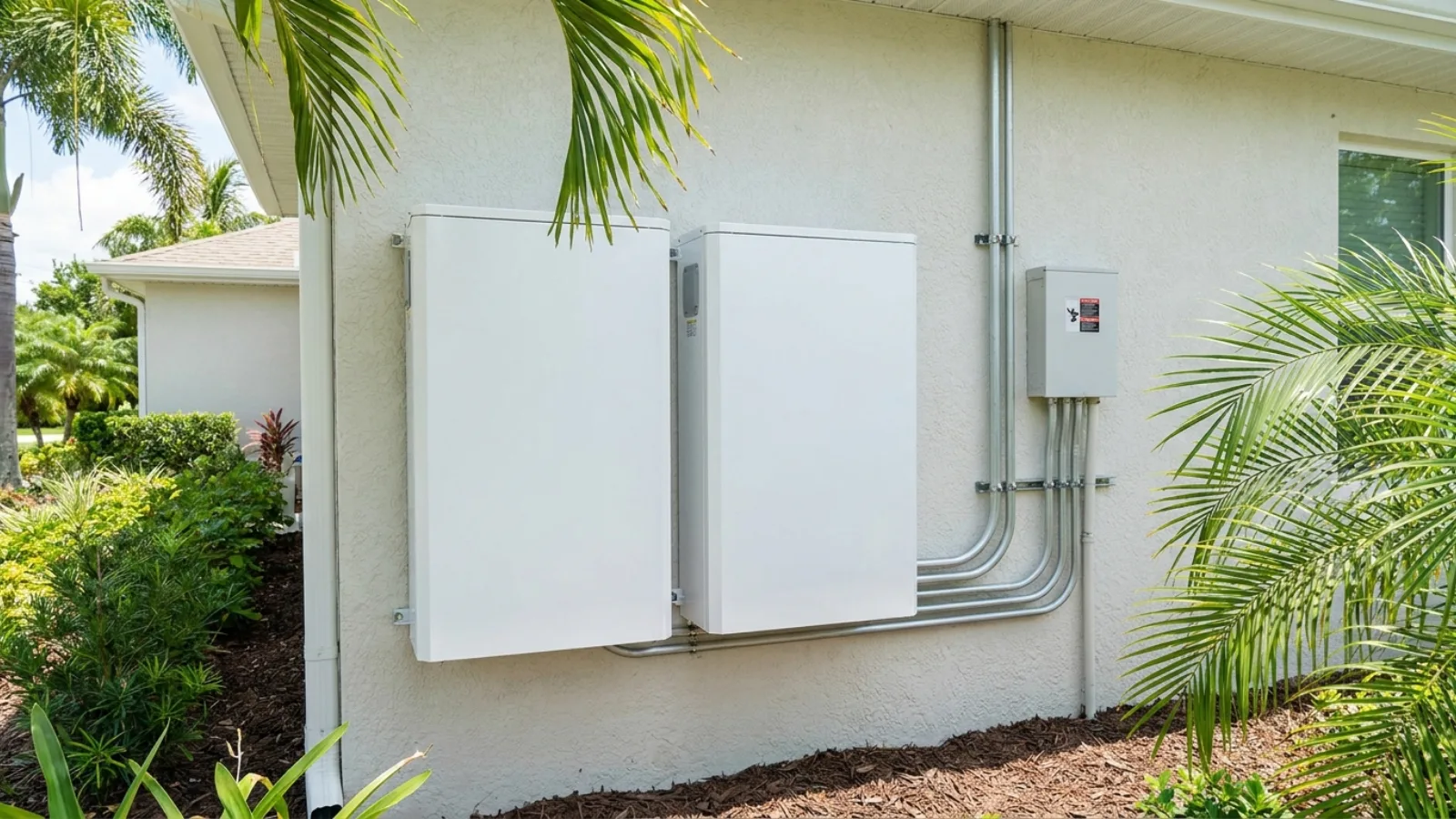

Do You Need a Permit for a Home Battery in Florida?
Short answer: yes, a home battery installation in Florida requires an electrical permit and an inspection, and in most cases a separate interconnection or parallel operation agreement with your utility.
Quick answer: Energy storage is treated as a permanent electrical installation. That means permit, inspection, and utility notification. Systems designed so they can never export to the grid may follow a shorter utility path, but they still need the permit.
Homeowners are often told a battery is a simple appliance swap. It is not. A battery ties into your service panel, can back-feed circuits, and in most configurations can operate in parallel with the utility grid. All three of those things put it firmly inside the permitting system, and in Florida there is also a fire and placement dimension that reviewers take seriously.
What the process involves
| Step | What happens | Who handles it |
|---|---|---|
| Load and design review | Battery capacity, continuous output, protected circuits and panel capacity assessed | Installer |
| Electrical permit | Application with single-line diagram and equipment listings | Installer, on your behalf |
| Placement and fire review | Location, clearances, separation and ventilation reviewed against the adopted code | Building department |
| Installation | Battery, inverter, protected loads sub-panel and disconnects | Installer |
| Inspection | Inspector verifies the built system matches approved plans and labelling | Building department |
| Utility agreement | Interconnection or parallel operation agreement executed where the system can export | Utility, coordinated by installer |
What reviewers actually look at
- Placement and clearances. Garage wall, exterior wall, or utility room all carry different requirements. Bedrooms and living spaces are generally excluded.
- Aggregate energy capacity. Codes set limits on how much storage can sit in one location before additional separation or protection is required.
- Labelling and disconnects. First responders need to be able to identify and isolate a stored-energy source quickly. Missing labels are a common inspection failure.
- Heat. A Florida garage in July is a hostile environment for any battery. Placement affects both code compliance and how long the product lasts.
- Whether it can export. A battery that can push power back onto the grid needs utility approval. One configured to be non-export may not, which sometimes shortens the timeline considerably.
What we handle for you
We size the system to your actual protected loads, design the placement to meet clearance and fire requirements, pull the electrical permit, and handle the utility paperwork where the configuration requires it.
See what solar and battery storage would actually do for your home
We will pull your last 12 months of utility data, model your real consumption, and show you exactly what a system would cost and produce — no obligation, no pressure.
Frequently asked questions
Can I install a home battery myself in Florida?
Permanent electrical work on a service panel requires a licensed electrical contractor and a permit. This is not a do-it-yourself installation.
Does a battery need utility approval if I do not have solar?
If the system can operate in parallel with the grid or export to it, yes. Non-export configurations sometimes follow a simpler route.
Can I put a battery in my garage?
Usually yes, subject to clearance, separation and ventilation requirements, and subject to how hot that garage gets.
How long does battery permitting take?
It varies by jurisdiction, and the utility agreement runs on its own timeline. Both are normally longer than the installation itself.
Do I need a permit to add a battery to existing solar?
Yes. Adding storage changes the electrical system and normally requires both a permit and a revised interconnection agreement.