

Does Solar Affect Home Insurance in Florida?
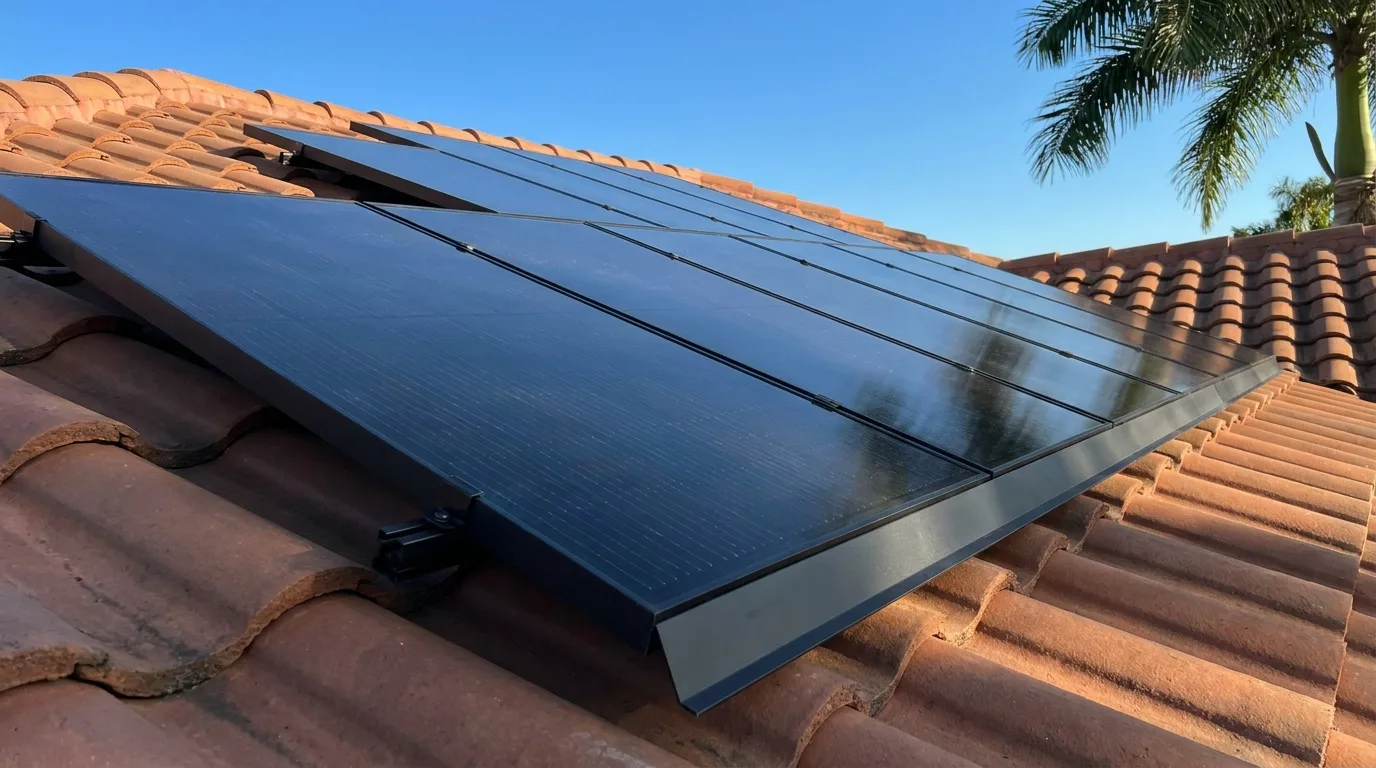
Short answer: yes, you should notify your insurer, because a roof-mounted solar array becomes part of the insured structure, and Florida carriers care a great deal about how it is attached and whether it was permitted.
Quick answer: Solar does not automatically raise or lower your premium in Florida, but it does change what you are insuring. Carriers will ask whether the installation was permitted, how it is attached, and what condition the roof underneath it is in.
Florida is the hardest property insurance market in the country, and carriers scrutinise anything attached to a roof. That cuts both ways for solar. A properly permitted, engineered array on a recently replaced roof is a documented improvement. An undocumented array on a fifteen-year-old roof is exactly the kind of risk carriers are currently walking away from.
What carriers typically ask about
| Question | Why they ask |
|---|---|
| Was the installation permitted and inspected? | Unpermitted alterations are a common basis for disputing a claim |
| How old is the roof underneath? | Roof age is the single biggest driver of Florida homeowners insurance decisions |
| How is the array attached? | Attachment method and engineering determine wind performance |
| What is the replacement value of the system? | Determines whether coverage limits need adjusting |
| Is the system owned, financed or leased? | Ownership structure affects who insures what |
Practical steps before and after installation
- Tell your insurer before you install, not after. A surprise discovered at claim time is much worse than a conversation beforehand.
- Deal with the roof first if it is near end of life. Doing the roof and the array as one permitted project is better for the insurance position as well as the cost.
- Keep the permit and inspection records. These are the documents that settle arguments later.
- Ask about your wind mitigation inspection. A re-roof done to current fastening and secondary water barrier standards can change your rating independently of the solar.
- Confirm coverage limits. A significant system may need the dwelling coverage reviewed so the array is fully covered.
What we handle for you
We provide the permit, inspection and engineering documentation your carrier is likely to ask for, and where the roof needs replacing first we handle both as a single permitted project.
See what solar and battery storage would actually do for your home
We will pull your last 12 months of utility data, model your real consumption, and show you exactly what a system would cost and produce — no obligation, no pressure.
Frequently asked questions
Do I have to tell my insurance company about solar panels?
Yes. A roof-mounted system becomes part of the insured structure and should be disclosed.
Will solar increase my home insurance premium in Florida?
It varies by carrier. The larger effect on Florida premiums is usually roof age and condition rather than the presence of solar.
Can an insurer refuse to cover a home with solar?
Carriers have their own underwriting rules. Unpermitted installations and older roofs are the common sticking points.
Are solar panels covered for hurricane damage?
Typically under the dwelling coverage if properly installed and disclosed, subject to your policy terms and hurricane deductible.
Does leased solar complicate insurance?
It can, because the equipment is owned by a third party. Confirm who insures the equipment and who insures the roof.