
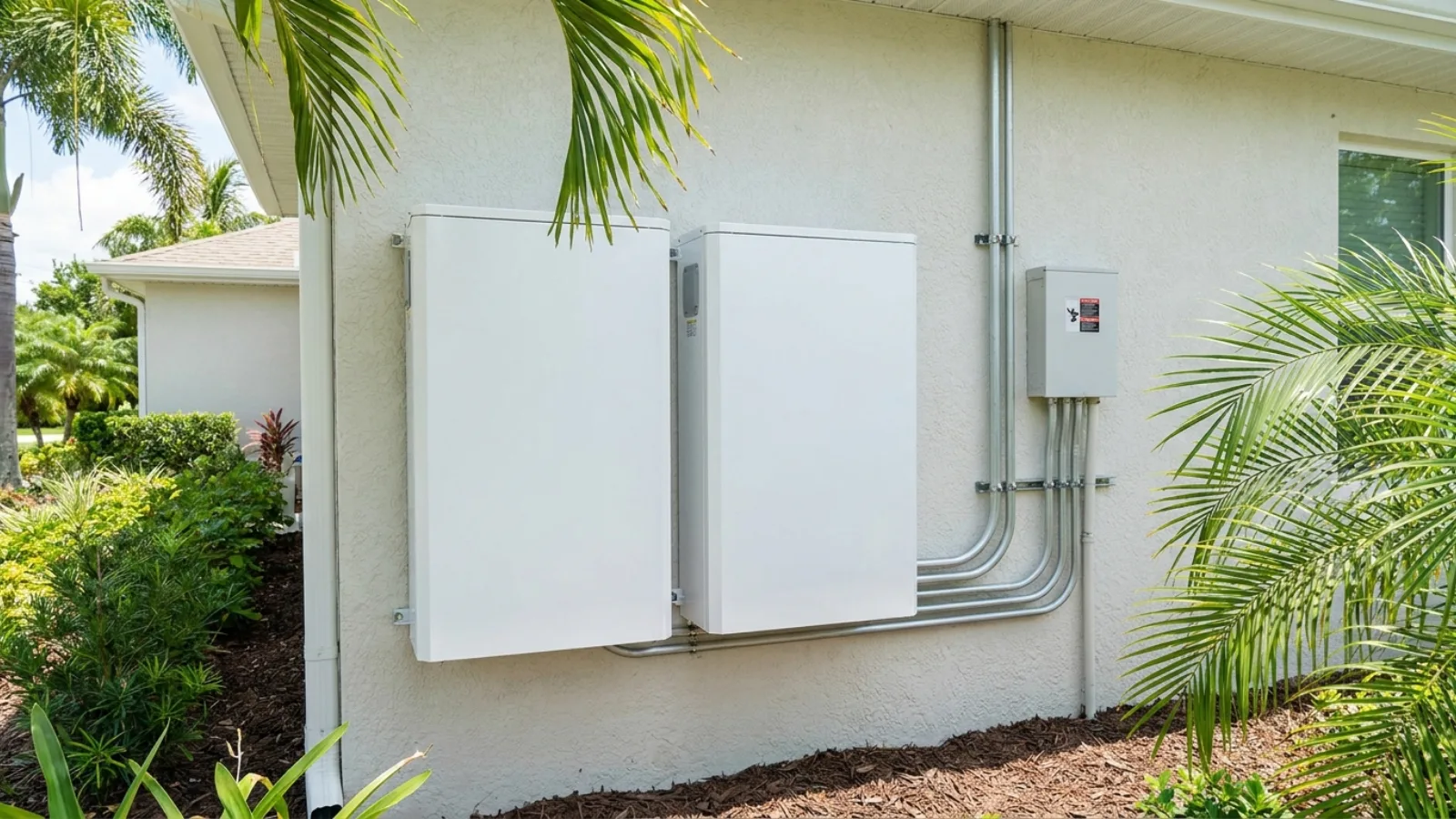

Can You Add a Battery to an Existing Solar System in Florida?
Short answer: usually yes, but how straightforward it is depends entirely on what inverter your existing system uses, and the retrofit needs a new permit and a revised utility agreement.
Quick answer: Adding storage to an existing array is common. The main variable is whether your current inverter can be paired with a battery directly, or whether the retrofit uses AC coupling to work alongside it.
Plenty of Florida homeowners installed solar before storage was affordable, and then lived through an outage with a working array they could not use, because a standard grid-tied system shuts down when the grid goes down. Retrofitting a battery fixes that. What it costs depends on the equipment you already have.
The two retrofit paths
| Approach | How it works | When it is used |
|---|---|---|
| DC coupling | Battery connects on the DC side through a hybrid inverter | Where the existing inverter is storage-ready or is being replaced anyway |
| AC coupling | Battery has its own inverter and works alongside the existing one | Where the existing inverter is working well and replacing it makes no sense |
| Inverter replacement | Existing inverter swapped for a hybrid unit | Where the original inverter is near end of life |
| Microinverter systems | Generally AC coupled, since generation is already converted at the module | Common on Enphase-based systems |
What determines the cost and the scope
- Your existing inverter. This is the single biggest variable. A storage-ready inverter makes the retrofit simple; an older string inverter usually means AC coupling or replacement.
- Which circuits you want backed up. A protected loads sub-panel is normally added, and the more circuits you protect the larger the battery has to be.
- Air conditioning. Backing up central air in Florida requires either soft-start hardware, an inverter-driven system, or more battery power output.
- Panel and placement. Space, clearances and heat all constrain where the battery can go.
- Warranty interaction. Adding equipment can affect the existing system warranty. Check before, not after.
What we handle for you
We assess what you already have, tell you which retrofit path actually fits it, and handle the new permit and the revised interconnection agreement with your utility.
See what solar and battery storage would actually do for your home
We will pull your last 12 months of utility data, model your real consumption, and show you exactly what a system would cost and produce — no obligation, no pressure.
Frequently asked questions
Will my existing solar keep working during the retrofit?
Usually there is a short shutdown while the work is done, but the array is not replaced.
Do I need a new permit to add a battery?
Yes. It is a change to the electrical system and normally requires a permit, an inspection and a revised utility agreement.
Can any solar system have a battery added?
Almost all can, though the method and the cost vary considerably with the existing inverter.
Why does my solar shut off in an outage?
Standard grid-tied inverters are required to disconnect when the grid goes down, to protect line workers. Storage with an islanding-capable system is what allows continued operation.
Should I have installed the battery at the same time as the solar?
It is generally cheaper as one project, but retrofitting is entirely normal and often the right call if the economics have changed.