
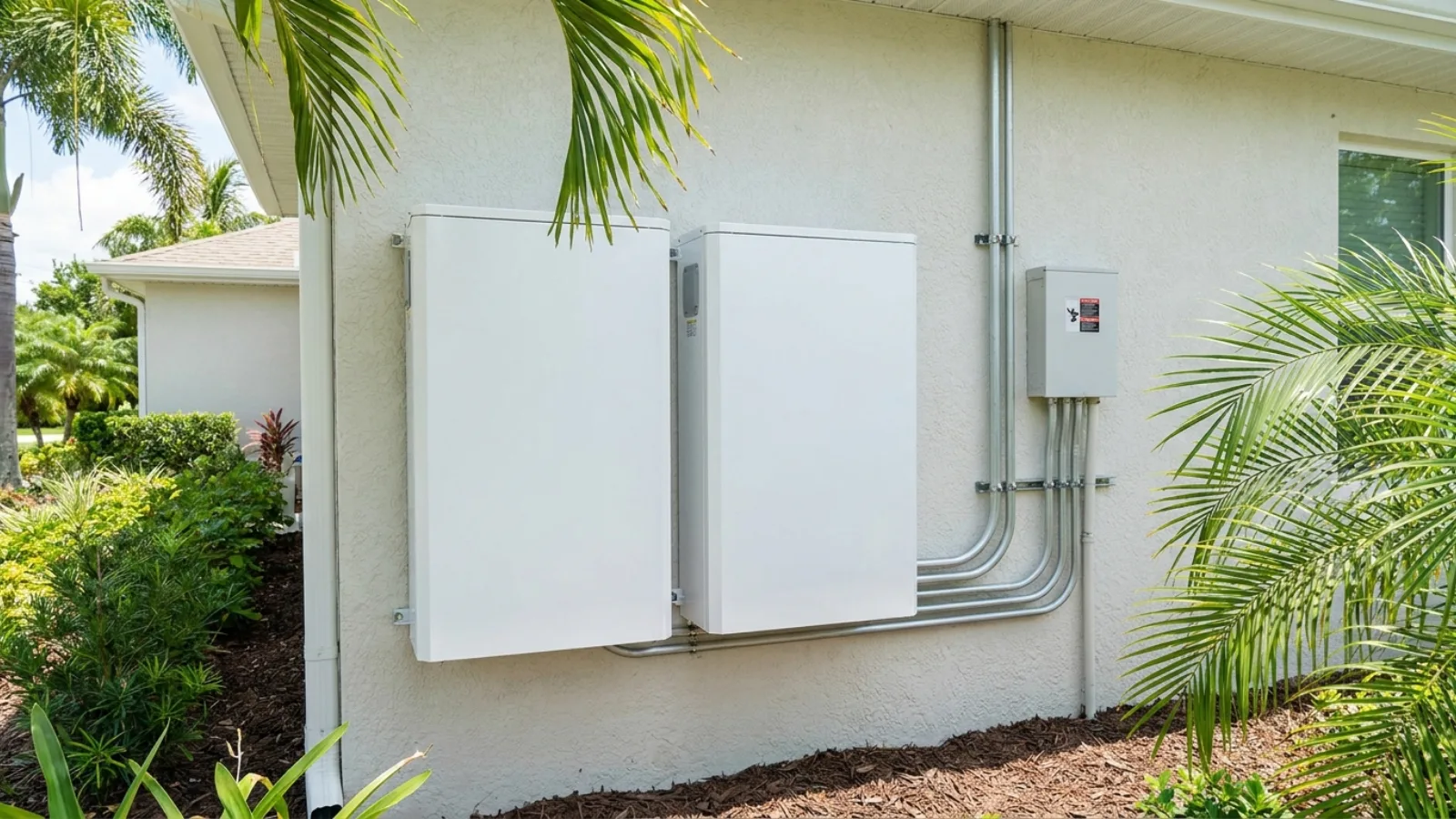

Battery Storage vs. a Gas Generator: Which Makes More Sense for Florida Homeowners?
Short answer: battery storage offers automatic, quiet, fuel-free backup power but with limited runtime unless paired with solar, while a gas generator can sustain higher loads for longer stretches but depends on fuel supply, regular maintenance, and generally requires manual startup unless it’s a permanently installed automatic unit.
Quick answer: Battery storage switches on automatically and runs silently with no fuel to manage, while a gas generator can typically deliver more sustained power for longer outages as long as fuel is available, and many Florida homeowners weigh noise, maintenance, and fuel logistics against runtime and cost when choosing between them, or combining both.
How each option actually works during an outage
A home battery system, especially one paired with solar, detects a grid outage and switches over automatically, drawing on stored (and potentially solar-recharged) energy to power your home or selected circuits without any action needed from you.
A gas generator, depending on whether it’s a portable unit or a permanently installed automatic standby generator, either requires you to manually set it up and fuel it, or (for automatic standby models) starts on its own similarly to a battery system, but continues running as long as fuel is supplied, which introduces its own logistics during extended outages.
Tradeoffs worth weighing
Generators are generally louder, require regular maintenance like oil changes, and depend on a fuel supply that can become difficult to access during widespread regional outages, which is a real consideration during hurricane season in Florida. Battery systems are quiet and maintenance is minimal, but their runtime is limited by stored capacity unless recharged by solar or, eventually, the returning grid.
Cost structures also differ. Generators typically involve ongoing fuel costs and periodic maintenance, while battery systems have upfront equipment costs but little to no ongoing operating expense. Which tradeoff matters more depends on how often you expect to use backup power and for how long.
Why some homeowners choose both
Battery storage and a generator aren’t mutually exclusive, and some homeowners pair the two so the battery handles shorter outages automatically and quietly, while the generator serves as a backup for longer or more severe outages where sustained high loads or extended runtime matter most.
The right combination, or whether one alone is sufficient, really depends on your home’s typical loads, how often your area experiences outages, and how much backup runtime matters to you, which is a conversation worth having directly rather than assuming one option fits every household.
See what solar and battery storage would actually do for your home
We will pull your last 12 months of utility data, model your real consumption, and show you exactly what a system would cost and produce — no obligation, no pressure.
Frequently asked questions
Is battery storage or a generator better for a Florida home?
It depends on your priorities. Battery storage offers quiet, automatic, fuel-free backup with limited runtime, while a generator can sustain higher loads longer but depends on fuel and maintenance. Many factors go into the right choice for your household.
Can I use both a battery system and a generator?
Yes, some homeowners pair both so the battery covers shorter outages automatically and the generator provides extended backup for longer events, though this needs to be planned and installed correctly together.
Do generators require a lot of maintenance?
Generally yes, including periodic oil changes, testing, and fuel management, which is an ongoing responsibility compared to the lower maintenance needs of a battery system.
Is a battery system quieter than a generator?
Yes, battery systems operate silently since there’s no combustion engine involved, which is a meaningful difference for some homeowners compared to the noise of a running generator.
Which option is better for hurricane season in Florida?
Both have advantages, generators for potentially longer sustained runtime if fuel is available, and batteries for automatic, fuel-free operation, especially when paired with solar. It’s worth discussing your specific outage history and priorities with an installer.
Related guides
- Battery storage
- What happens to your home battery during a Florida power outage?
- Can a bidirectional EV charger power your home during an outage?
- Florida solar by city
- Get a free energy evaluation
Figures on this page are typical industry averages for planning purposes and assume Florida’s 14.5¢/kWh average residential rate and 5.5 peak-sun hours per day. Your actual numbers will differ based on your utility, roof, and system — request a free evaluation for figures specific to your home.