
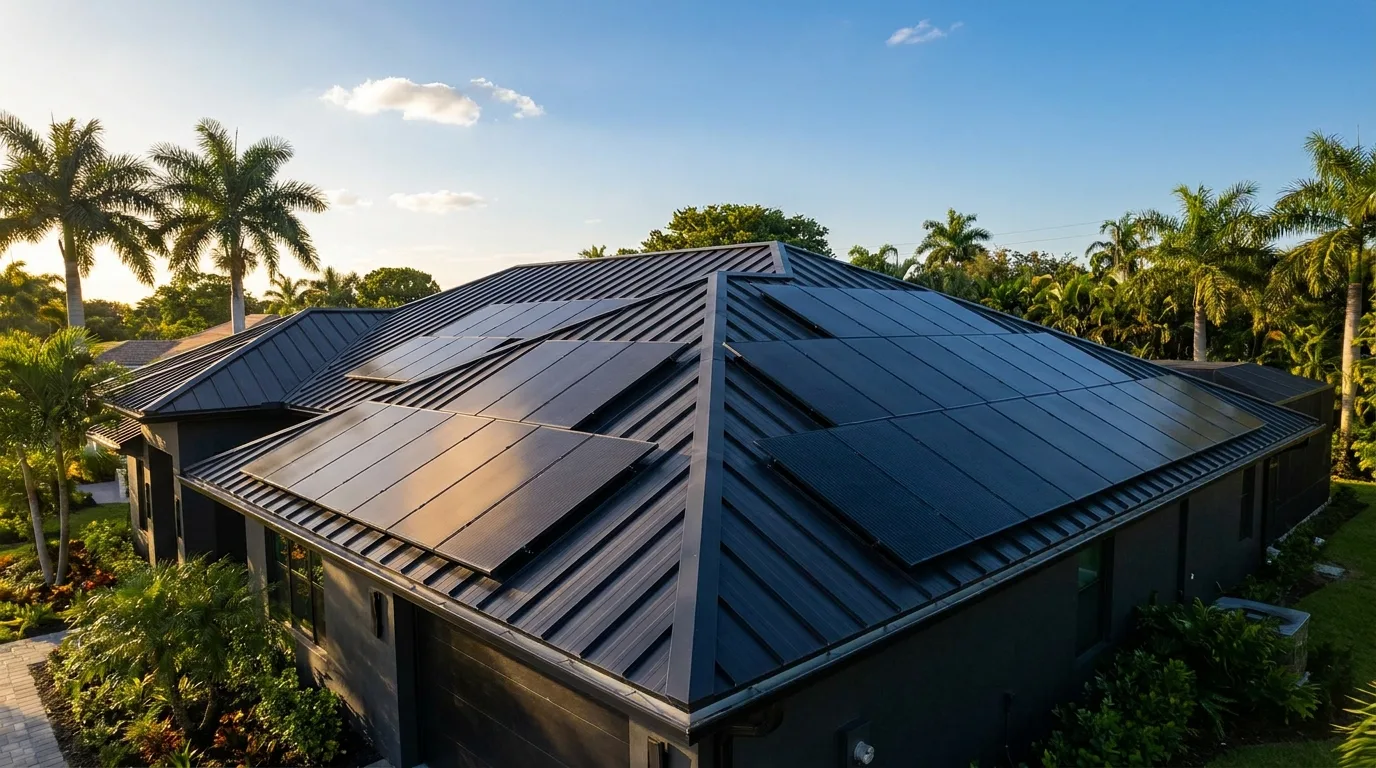

Does Florida Have a Property Tax Exclusion for Solar Panels?
Short answer: yes. Florida law excludes the added value of a qualifying renewable energy system from your home’s assessed value for property tax purposes, so installing solar shouldn’t by itself raise your property taxes.
Quick answer: Florida provides a property tax exclusion for qualifying renewable energy devices, including residential solar systems. This means the value your solar system adds to your home isn’t factored into your property’s taxable assessed value, even though it can still add real market value when you sell.
Why this distinction matters
It’s an important distinction: the exclusion affects taxable assessed value, not market value. Your home may still be worth more with solar installed, which can benefit you at resale, without that added value increasing your annual property tax bill.
This is one of the more homeowner-friendly aspects of Florida’s approach to solar, since it removes a potential cost concern that exists in some other states.
What counts as a qualifying system
The exclusion generally applies to systems that meet the state’s definition of a renewable energy source device, which residential solar and battery storage typically satisfy. As with any tax-related question, your county property appraiser’s office is the authoritative source if you want written confirmation specific to your property.
We can point you toward the right resources, but recommend confirming property-tax specifics directly with your county appraiser for anything you plan to rely on for filing purposes.
See what solar and battery storage would actually do for your home
We will pull your last 12 months of utility data, model your real consumption, and show you exactly what a system would cost and produce — no obligation, no pressure.
Frequently asked questions
Will installing solar panels increase my property taxes in Florida?
Florida’s property tax exclusion for renewable energy devices means the added value from a qualifying solar system generally isn’t included in your assessed value, so it shouldn’t by itself raise your property taxes.
Does the exclusion mean solar doesn’t add value to my home?
No. Solar can still add real market value to your home, particularly at resale. The exclusion only affects how that value is treated for property tax assessment purposes.
Do I need to apply for the property tax exclusion?
Requirements can vary by county, so it’s worth checking with your local property appraiser’s office to confirm whether any filing is needed for your specific situation.
Does this exclusion apply to battery storage too?
Battery storage systems installed alongside solar can often qualify as part of a renewable energy device, but it’s best to confirm this with your county property appraiser for your specific system.
Is this exclusion permanent or does it expire?
Property tax rules can be updated by the state legislature over time, so it’s worth confirming current status if you’re making a decision based specifically on this exclusion.
Related guides
- Does Florida have a sales tax exemption for solar equipment?
- Do solar panels increase home value?
- Home solar, battery and EV charging in Florida
- Solar systems
- Battery storage
- Florida solar by city
Figures on this page are typical industry averages for planning purposes and assume Florida’s 14.5¢/kWh average residential rate and 5.5 peak-sun hours per day. Your actual numbers will differ based on your utility, roof, and system — request a free evaluation for figures specific to your home.