
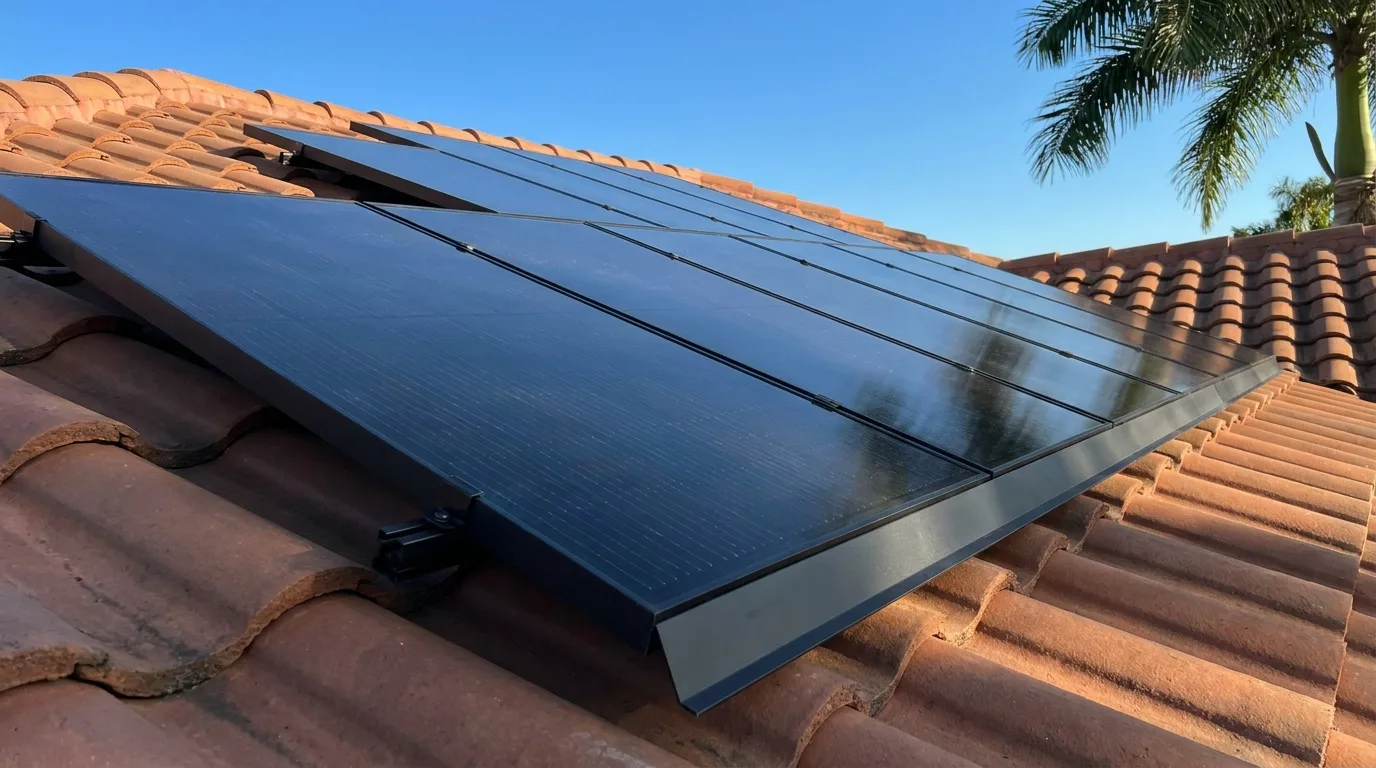

Monocrystalline vs. Polycrystalline Solar Panels
Short answer: monocrystalline panels are generally more efficient and now dominate the residential market; polycrystalline panels are less common today but were historically a lower-cost alternative.
Quick answer: Monocrystalline panels are made from a single silicon crystal, giving them higher efficiency and a sleeker black appearance. Polycrystalline panels use multiple silicon fragments melted together, historically cheaper but less efficient, and are now much less common in new residential installations.
This used to be a bigger decision point than it is today. The residential market has shifted heavily toward monocrystalline technology as manufacturing costs have come down, but it’s still useful to understand the distinction.
Side-by-side comparison
| Feature | Monocrystalline | Polycrystalline |
|---|---|---|
| Silicon structure | Single crystal | Multiple silicon fragments melted together |
| Typical efficiency | ~19-22% | ~15-17% |
| Appearance | Uniform black | Blueish, speckled look |
| Space efficiency | More power per square foot | Less power per square foot |
| Market availability today | Dominant choice for residential installs | Increasingly rare in new residential systems |
Why monocrystalline became the standard
As manufacturing scale increased, the price gap between the two technologies narrowed significantly, while monocrystalline’s efficiency advantage remained. For most homeowners today, especially those with limited roof space, monocrystalline panels deliver more value for a similar cost, which is why they’ve become the default recommendation for most residential installs.
Is there ever a reason to consider polycrystalline?
In practice, polycrystalline panels are rarely the recommended choice for new residential installations today given how the pricing has converged with monocrystalline options. We specify the panel technology that fits your roof and budget during your proposal, but for most Florida homes, that recommendation is monocrystalline.
See what solar and battery storage would actually do for your home
We will pull your last 12 months of utility data, model your real consumption, and show you exactly what a system would cost and produce — no obligation, no pressure.
Frequently asked questions
What’s the main difference between monocrystalline and polycrystalline panels?
Monocrystalline panels are made from a single silicon crystal and are generally more efficient; polycrystalline panels use multiple silicon fragments melted together and are typically less efficient.
Which type of panel is more common for homes today?
Monocrystalline panels dominate the residential market today, as manufacturing costs have come down and their efficiency advantage remains valuable, especially for homes with limited roof space.
Are polycrystalline panels cheaper than monocrystalline?
Historically yes, but the price gap has narrowed significantly as manufacturing has scaled, which is a major reason monocrystalline has become the standard choice for most residential installations.
Does panel type affect how a system looks on my roof?
Yes. Monocrystalline panels typically have a uniform black appearance, while polycrystalline panels have a more blueish, speckled look, which some homeowners factor into their decision.
Should I choose monocrystalline for a small roof?
Generally yes. Monocrystalline’s higher efficiency means more power per square foot, which is particularly valuable when usable roof space is limited.
Related guides
- How does solar panel efficiency affect system size?
- How much roof space do you need for solar?
- Home solar, battery and EV charging in Florida
- Solar systems
- Battery storage
- Florida solar by city
Figures on this page are typical industry averages for planning purposes and assume Florida’s 14.5¢/kWh average residential rate and 5.5 peak-sun hours per day. Your actual numbers will differ based on your utility, roof, and system — request a free evaluation for figures specific to your home.