

What Is NFPA 855 and How Does It Affect Home Batteries in Florida?
Short answer: NFPA 855 is the standard for the installation of stationary energy storage systems, and it drives where a home battery can be placed, how much capacity is allowed in one location, and what separation and protection is required.
Quick answer: When a Florida plan reviewer questions your battery location, clearances or aggregate capacity, NFPA 855 is usually the underlying reason. It is the reason batteries are not simply hung wherever there is wall space.
Lithium battery systems store a large amount of energy in a small space. NFPA 855 exists to manage that sensibly: it sets limits on how much energy can be installed in a given location, what spacing is needed between units, which rooms are acceptable, and what fire protection or detection is expected. Local jurisdictions adopt it through the fire and building code, so the specifics can vary.
The factors that shape a home installation
| Factor | What it affects |
|---|---|
| Location type | Garages, utility rooms and exterior walls are typical; sleeping areas generally are not |
| Aggregate energy capacity | Larger installations may require additional separation, protection or a different location |
| Separation between units | Spacing requirements where multiple batteries are installed together |
| Fire detection | Smoke or heat detection may be required in the installation area |
| Ventilation and thermal management | Particularly relevant in Florida, where garage temperatures are extreme |
What this means for a Florida home
- Garage heat is a genuine design factor. A garage at 105 degrees in July shortens battery life. Placement is an engineering decision, not an aesthetic one.
- Wall space is not the only constraint. Clearance in front of the unit, distance from doors and windows, and proximity to other equipment all matter.
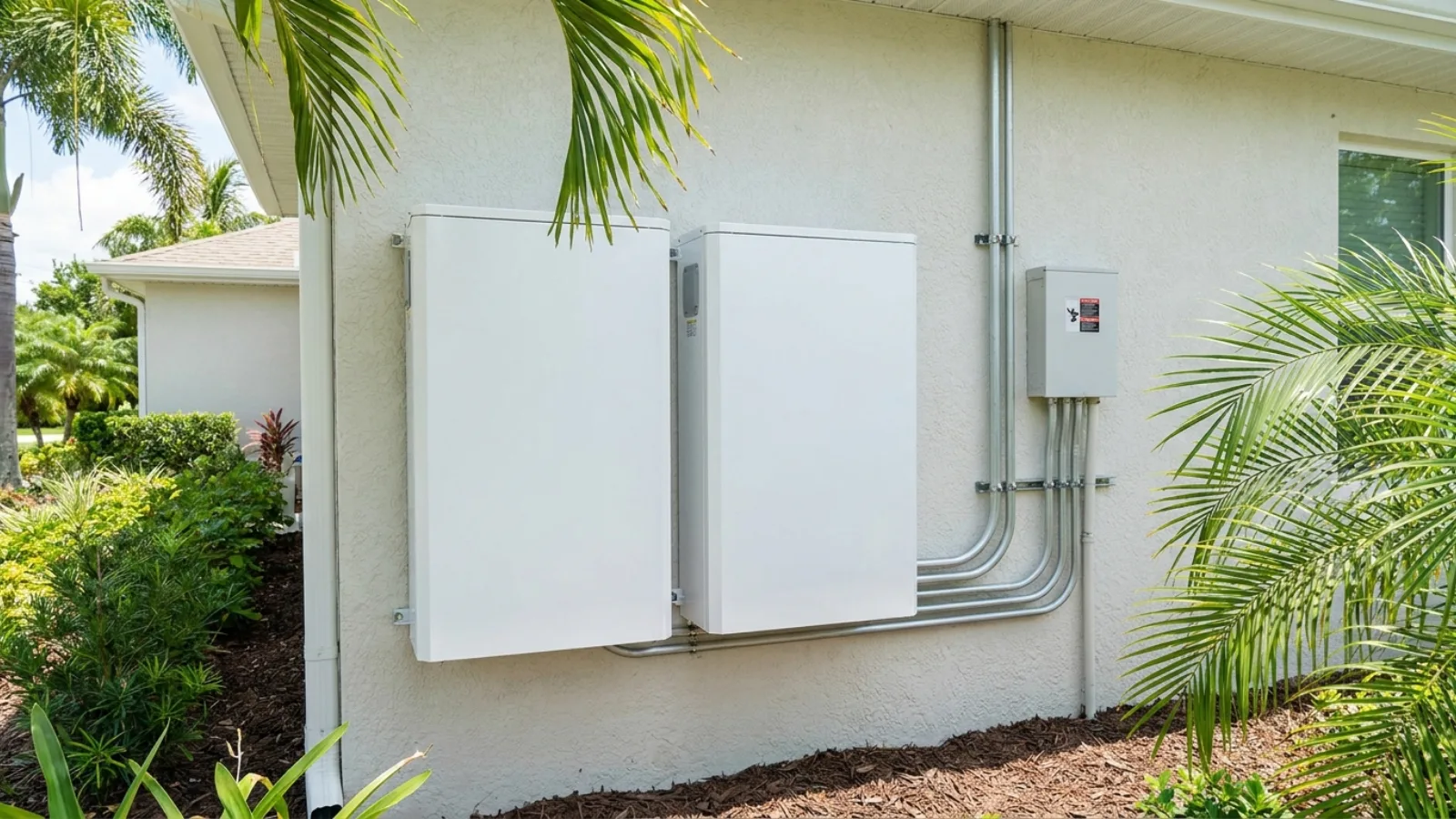
- Exterior mounting has its own requirements. Outdoor enclosures near the coast face salt exposure, and in the High-Velocity Hurricane Zone they need appropriate approval and attachment.
- Capacity limits can change the design. A larger battery bank may need to be split or relocated rather than simply added to.
- Local adoption varies. Which edition applies and how it is enforced differs by jurisdiction, which is why local experience matters.
What we handle for you
We design placement against the code your jurisdiction has actually adopted, allow for Florida heat rather than ignoring it, and get the location agreed at plan review rather than discovering a problem at inspection.
See what solar and battery storage would actually do for your home
We will pull your last 12 months of utility data, model your real consumption, and show you exactly what a system would cost and produce — no obligation, no pressure.
Frequently asked questions
Can I put a battery inside my house?
Utility rooms and similar spaces are often acceptable; sleeping areas generally are not. Location is reviewed as part of the permit.
How many batteries can I install?
There are limits on aggregate energy capacity in a single location, which drive spacing and placement for larger installations.
Does a battery need a smoke detector?
Detection in the installation area is commonly required. Requirements depend on the code edition your jurisdiction has adopted.
Is an outdoor battery better in Florida?
It avoids garage heat but introduces weather, salt and, in the High-Velocity Hurricane Zone, additional approval requirements. Both routes work when designed properly.
Does this apply to portable power stations?
No. NFPA 855 addresses permanently installed stationary storage, not portable plug-in units.