
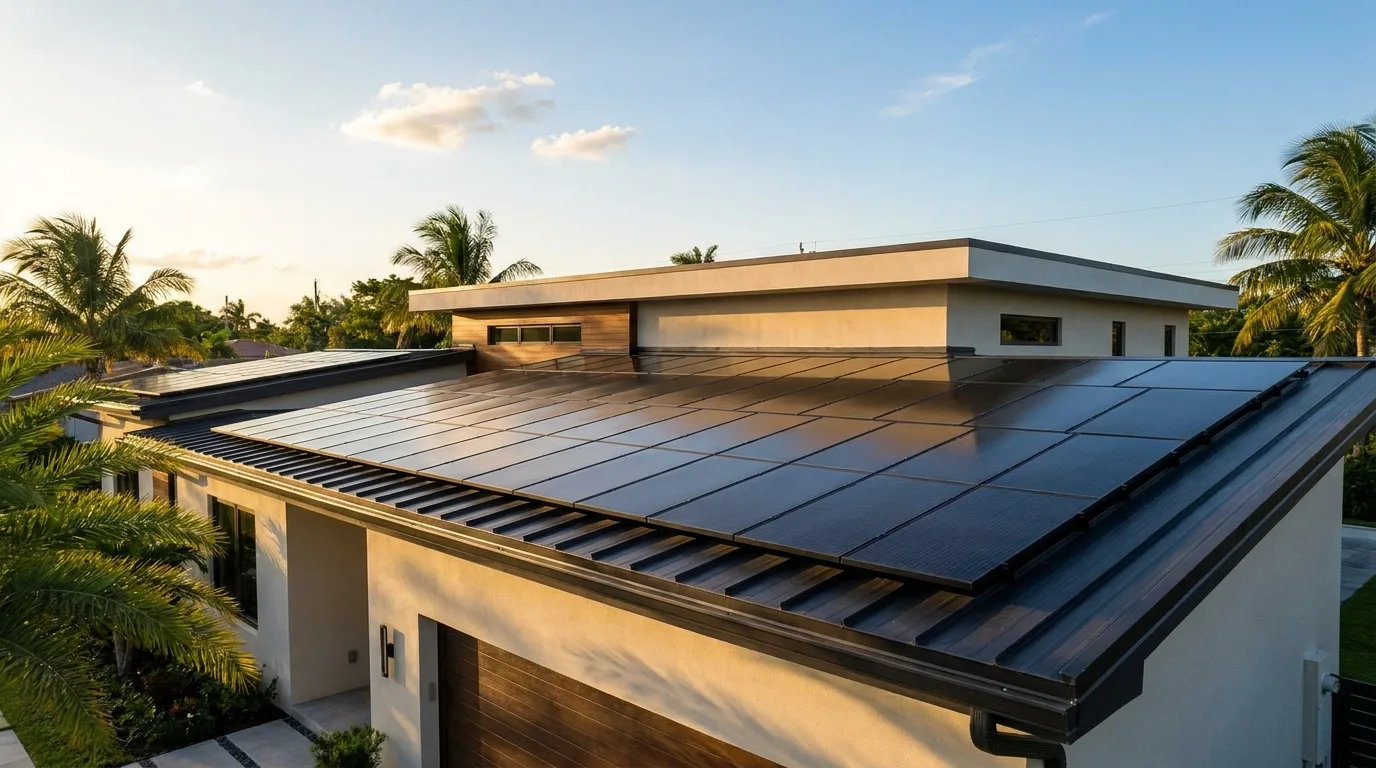

Solar Panel Maintenance: What to Expect
Short answer: solar panels require very little active maintenance — no moving parts, occasional cleaning, and periodic monitoring checks are typically enough for most Florida homes.
Quick answer: Most solar maintenance is passive: monitoring software flags production issues, occasional rain naturally cleans panels, and a professional inspection every few years catches anything monitoring might miss. There’s no engine, no fluids, and no scheduled service most homeowners need to think about.
Solar panels are solid-state devices with no moving parts, which is a big part of why they require so little ongoing maintenance compared to other home systems like HVAC.
What actually needs attention
| Task | Frequency | Who typically handles it |
|---|---|---|
| Production monitoring | Ongoing, automatic | Monitoring app/software, flags issues for you |
| Panel cleaning | As needed — rain handles most of it in Florida | Homeowner or a professional cleaning service if dust/pollen buildup is heavy |
| Visual inspection | Periodically, especially after major storms | Homeowner, or a professional if damage is suspected |
| Inverter check | Per manufacturer guidance, often as part of monitoring alerts | Installer or manufacturer support |
Signs something needs a closer look
- A sudden, unexplained drop in production shown in your monitoring app, especially if it’s isolated to one panel or string.
- Visible debris or heavy pollen buildup that isn’t clearing with normal rainfall.
- Physical damage after a severe storm, even if the system still appears to be producing.
- Error codes or alerts from your inverter or monitoring system.
Why Florida rain does most of the cleaning
Florida’s frequent rainfall naturally rinses dust and loose debris off panels for most homes, which is why routine professional cleaning isn’t typically necessary unless you’re near heavy construction dust, agricultural fields, or dense tree pollen. Monitoring is really the main ongoing task, and it’s largely automatic once set up.
See what solar and battery storage would actually do for your home
We will pull your last 12 months of utility data, model your real consumption, and show you exactly what a system would cost and produce — no obligation, no pressure.
Frequently asked questions
Do solar panels require regular maintenance?
Very little. Panels have no moving parts, and most maintenance is passive — automatic production monitoring, occasional natural cleaning from rain, and periodic visual inspection.
How often should solar panels be professionally cleaned?
Most Florida homes don’t need routine professional cleaning since rainfall handles it naturally. It may be worth considering if you’re near heavy dust, construction, or dense pollen sources.
How do I know if my solar system has a problem?
Production monitoring software typically flags unexplained drops in output, which is often the first sign of an issue, sometimes before it’s visible on the roof.
Should I inspect my panels after a storm?
Yes, a visual check after a major storm is a good idea, even if the system still appears to be producing normally, since some damage isn’t obvious from production data alone.
What maintenance does the inverter need?
Inverters generally don’t need routine active maintenance, but they should be monitored for error codes or alerts, and may need replacement before the panels do, depending on the warranty term.
Related guides
- How long do solar panels last?
- What is a solar production guarantee?
- Home solar, battery and EV charging in Florida
- Solar systems
- Battery storage
- Florida solar by city
Figures on this page are typical industry averages for planning purposes and assume Florida’s 14.5¢/kWh average residential rate and 5.5 peak-sun hours per day. Your actual numbers will differ based on your utility, roof, and system — request a free evaluation for figures specific to your home.