
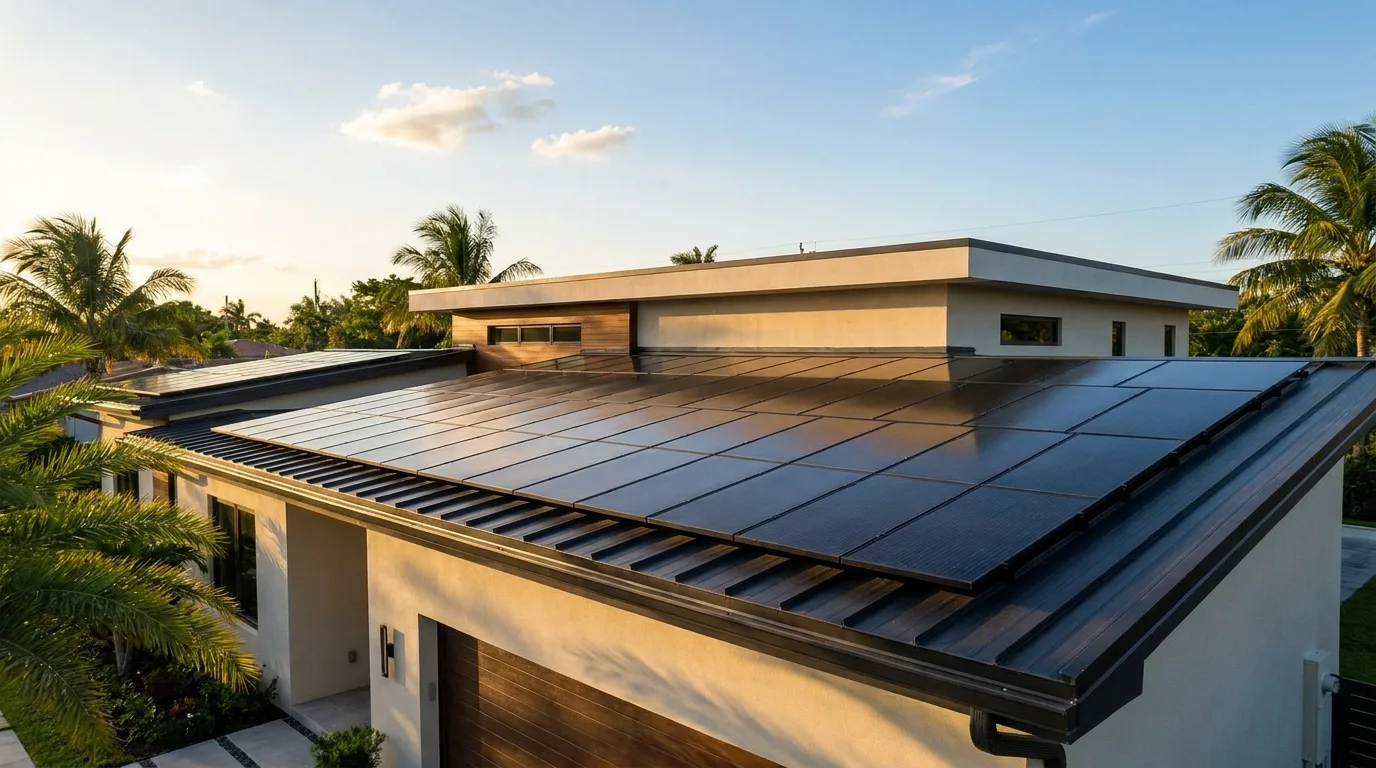

What Happens to Solar Panels When You Sell Your Home?
Short answer: owned systems typically transfer with the home and can support your sale price, while financed or leased systems require some extra paperwork — either a loan payoff, a lease transfer, or a buyout — before closing.
Quick answer: How solar affects a home sale depends heavily on how the system is owned. Fully paid-off systems are usually a straightforward selling point. Systems with a loan, lease, or power purchase agreement attached need to be addressed as part of the closing process, but none of these situations typically stop a sale from happening.
Homeowners considering solar sometimes worry it could complicate a future sale. In practice, it’s a manageable part of the transaction as long as the ownership structure is clear and documented.
How ownership structure affects the sale
| Ownership type | What happens at sale |
|---|---|
| Fully owned (cash or paid-off loan) | Transfers with the home like any other fixture; often a selling point |
| Active solar loan | Remaining balance is typically paid off from sale proceeds at closing |
| Lease or PPA | Must be transferred to the buyer (who applies to qualify) or bought out before closing |
Steps to prepare before listing
- Gather your documentation. Permits, utility interconnection approval, warranties, and any financing or lease agreements should be ready to show buyers and their agents.
- Confirm your payoff or transfer terms. If you have a loan or lease, get the exact payoff amount or transfer requirements from your provider early in the process.
- Be ready to explain system performance. Buyers often appreciate seeing actual production history and utility bill savings, not just the equipment itself.
- Loop in your real estate agent early. An agent familiar with solar transactions can help set expectations and avoid last-minute surprises during closing.
Why documentation matters so much
Missing or incomplete paperwork is the most common source of friction in solar-related home sales, not the presence of solar itself. Buyers, their lenders, and appraisers all want clarity on what’s owned outright versus what carries an ongoing obligation, so keeping organized records from day one makes a future sale considerably smoother.
See what solar and battery storage would actually do for your home
We will pull your last 12 months of utility data, model your real consumption, and show you exactly what a system would cost and produce — no obligation, no pressure.
Frequently asked questions
Do solar panels increase or complicate a home sale?
Owned solar systems generally make a home more attractive to buyers and can support a higher sale price, though the panels do need to be properly documented and disclosed as part of the sale.
What if I still owe money on a solar loan when I sell?
You can typically pay off the remaining loan balance at closing from the sale proceeds, similar to how a mortgage payoff works, or in some cases the buyer may agree to assume the loan.
Is a leased solar system a problem when selling?
Leased or PPA systems require either transferring the agreement to the buyer, who must qualify with the leasing company, or buying out the remaining contract before closing, which can add a step to the sale process.
What documentation should I keep for a future home sale?
Keep your installation permit, utility interconnection approval, system specifications, warranty documents, and any financing or lease agreements, since buyers and appraisers may request these.
Do appraisers account for solar panels in a home’s value?
Appraisal practices vary, but owned systems with clear documentation are more likely to be reflected in an appraisal than leased systems, which appraisers often treat differently or exclude.
Related guides
- Do solar panels increase home value?
- Solar financing: cash, loan, or lease?
- Home solar, battery and EV charging in Florida
- Solar systems
- Battery storage
- Florida solar by city
Figures on this page are typical industry averages for planning purposes and assume Florida’s 14.5¢/kWh average residential rate and 5.5 peak-sun hours per day. Your actual numbers will differ based on your utility, roof, and system — request a free evaluation for figures specific to your home.