

What Wind Rating Do Solar Panels Need to Meet in Florida?
Short answer: your solar system must be engineered to meet the wind-load requirements of the Florida Building Code for your specific location, which vary by region and are especially strict in High-Velocity Hurricane Zones like Miami-Dade and Broward.
Quick answer: Florida requires solar installations to be engineered for site-specific wind loads under the Florida Building Code. Requirements differ by county and wind zone, with the strictest standards applying in High-Velocity Hurricane Zones, so a one-size-fits-all wind rating doesn’t apply statewide.
Why wind ratings vary across Florida
Florida’s wind-load requirements are based on regional risk mapping, so a system engineered for a coastal High-Velocity Hurricane Zone will typically require more robust mounting hardware and anchoring than one further inland. This is handled through the engineered plans submitted during permitting, not a single statewide number.
This is one of the reasons a generic online quote can’t fully replace a proper site evaluation: your specific address, roof type, and local wind zone all factor into how your system is engineered.
What this means for your installation
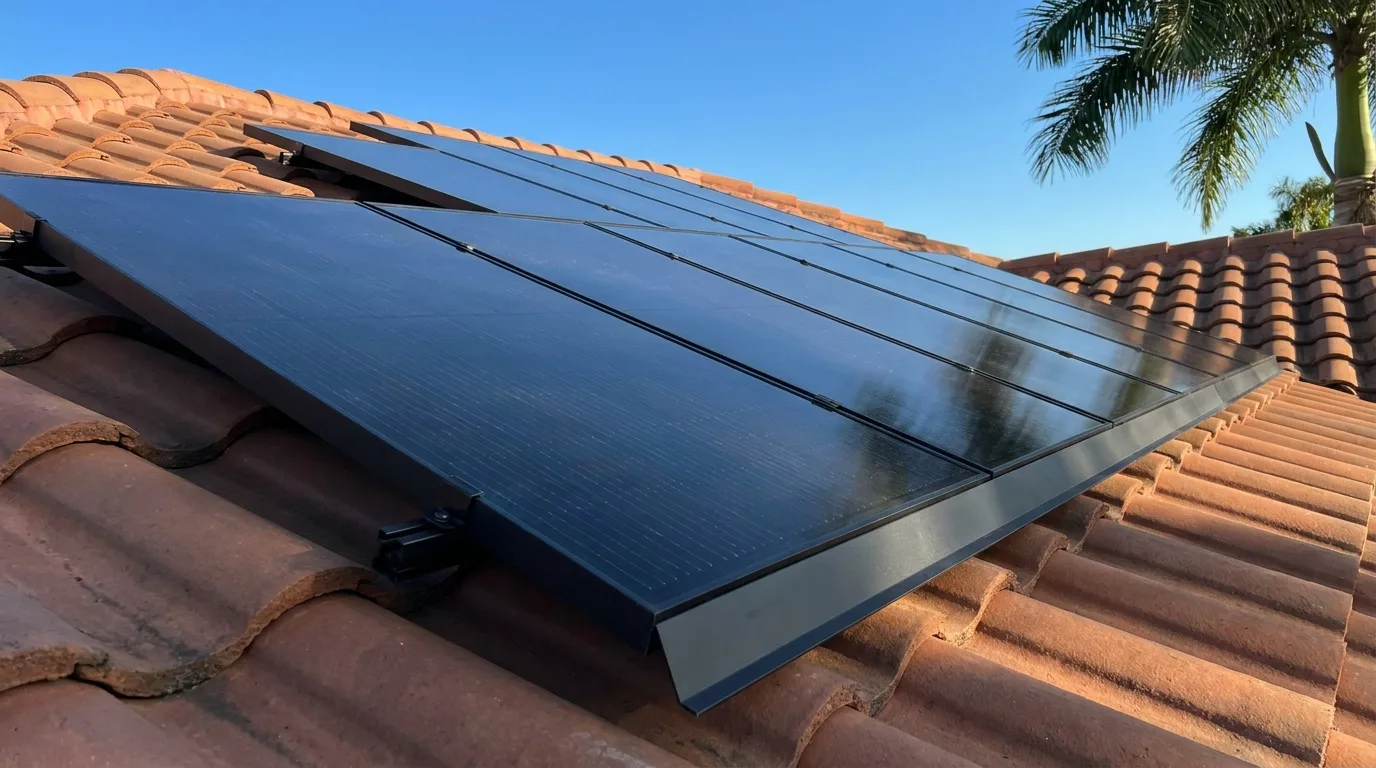
A qualified installer will design your racking and mounting system to meet the wind-load engineering required for your address as part of the standard permitting process, using attachment methods and hardware appropriate to your roof type.
This engineering is reviewed by your local building department as part of permitting, which is one of the reasons Florida’s permitting and inspection process exists in the first place.
See what solar and battery storage would actually do for your home
We will pull your last 12 months of utility data, model your real consumption, and show you exactly what a system would cost and produce — no obligation, no pressure.
Frequently asked questions
Is there one wind rating that applies to all solar panels in Florida?
No. Wind-load requirements vary by region under the Florida Building Code, with the strictest standards in High-Velocity Hurricane Zones like Miami-Dade and Broward, so requirements are engineered per location rather than applying a single statewide figure.
Who determines the wind-load engineering for my system?
This is typically handled by your installer’s engineering team as part of the system design, using site-specific requirements based on your address and local building code, then reviewed by your local building department during permitting.
Do older solar systems meet current Florida wind-load standards?
Not necessarily. Building code requirements can be updated over time, so a system installed years ago may reflect the standards in place at that time rather than current requirements.
Does wind-load engineering affect the cost of my system?
It can, since more robust mounting and anchoring hardware may be required in higher wind zones, which is one reason your proposal should be based on your specific address rather than a generic estimate.
What happens if a system isn’t properly engineered for wind loads?
This is exactly what the permitting and inspection process is designed to catch. Your local building department reviews engineered plans before installation and inspects the completed work against those plans.
Related guides
- What happens to solar panels during a hurricane?
- How solar permitting and inspection works in Florida
- Home solar, battery and EV charging in Florida
- Solar systems
- Battery storage
- Florida solar by city
Figures on this page are typical industry averages for planning purposes and assume Florida’s 14.5¢/kWh average residential rate and 5.5 peak-sun hours per day. Your actual numbers will differ based on your utility, roof, and system — request a free evaluation for figures specific to your home.