

How Does Florida’s Heat and Humidity Affect Solar Panels?
Short answer: high heat can slightly reduce a panel’s electrical efficiency, while humidity and salt air mainly affect equipment durability, both of which are accounted for in proper system design and component selection for Florida homes.
Quick answer: Solar panels lose a small amount of efficiency as temperatures rise, which matters in Florida’s climate, while humidity and coastal salt exposure primarily affect long-term equipment durability rather than day-to-day output. Both factors are addressed through equipment choice and installation practices designed for Florida conditions.
How heat affects panel output
Solar panels are rated for performance under standard test conditions, and their output modestly declines as panel temperature rises above that baseline. This is a well-understood characteristic of solar technology generally, not unique to Florida, and is factored into production estimates for our climate.
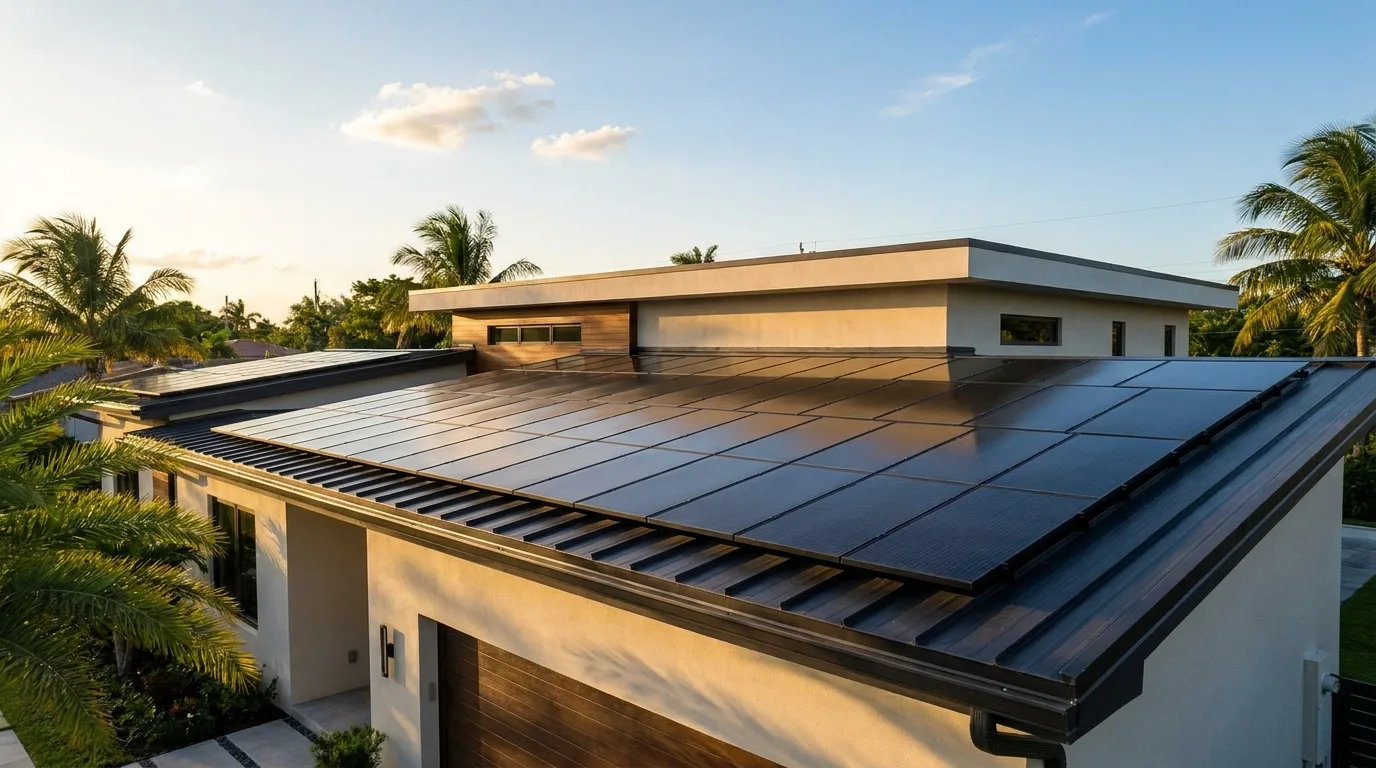
Panel mounting also plays a role, since a small air gap between the panel and roof surface helps with heat dissipation compared to a fully flush installation.
How humidity and salt air affect equipment
Florida’s humidity and, for coastal properties, salt air exposure primarily affect the long-term durability of mounting hardware, wiring, and electrical connections rather than daily energy production. This is why corrosion-resistant hardware and proper sealing matter, especially near the coast.
Choosing equipment rated appropriately for coastal or high-humidity environments, and following manufacturer installation guidelines, helps protect your system’s long-term performance and warranty coverage.
See what solar and battery storage would actually do for your home
We will pull your last 12 months of utility data, model your real consumption, and show you exactly what a system would cost and produce — no obligation, no pressure.
Frequently asked questions
Do solar panels produce less power in extreme heat?
Panels experience a modest efficiency decline as their temperature rises above standard test conditions, which is a normal characteristic of solar technology and is factored into production estimates for Florida’s climate.
Does Florida’s humidity damage solar panels?
Humidity mainly affects long-term equipment durability, such as mounting hardware and electrical connections, rather than day-to-day panel output, which is why proper sealing and corrosion-resistant hardware matter.
Do coastal homes need different solar equipment because of salt air?
Coastal properties can benefit from equipment and hardware specifically rated for salt air exposure, which helps protect long-term durability and warranty coverage compared to standard components.
Does the way panels are mounted affect how hot they get?
Yes, a small air gap between the panel and roof surface, standard in most mounting systems, helps with heat dissipation compared to a fully flush installation.
Should Florida homeowners expect lower solar output than other states because of heat?
Florida’s strong overall sun exposure generally outweighs the modest efficiency reduction from heat, which is why production estimates are based on your specific location’s full climate profile rather than temperature alone.
Related guides
- How does solar panel efficiency affect system size?
- Solar panel maintenance: what to expect
- Home solar, battery and EV charging in Florida
- Solar systems
- Battery storage
- Florida solar by city
Figures on this page are typical industry averages for planning purposes and assume Florida’s 14.5¢/kWh average residential rate and 5.5 peak-sun hours per day. Your actual numbers will differ based on your utility, roof, and system — request a free evaluation for figures specific to your home.